.png)
Indian court bars news website from publishing stories on businessman
JournalismPakistan.com | Published: 26 October 2017
Join our WhatsApp channel
The Indian judiciary has barred The Wire from reporting on Jay Shah as part of a criminal defamation case. The decision has drawn condemnation from press freedom advocates.Summary
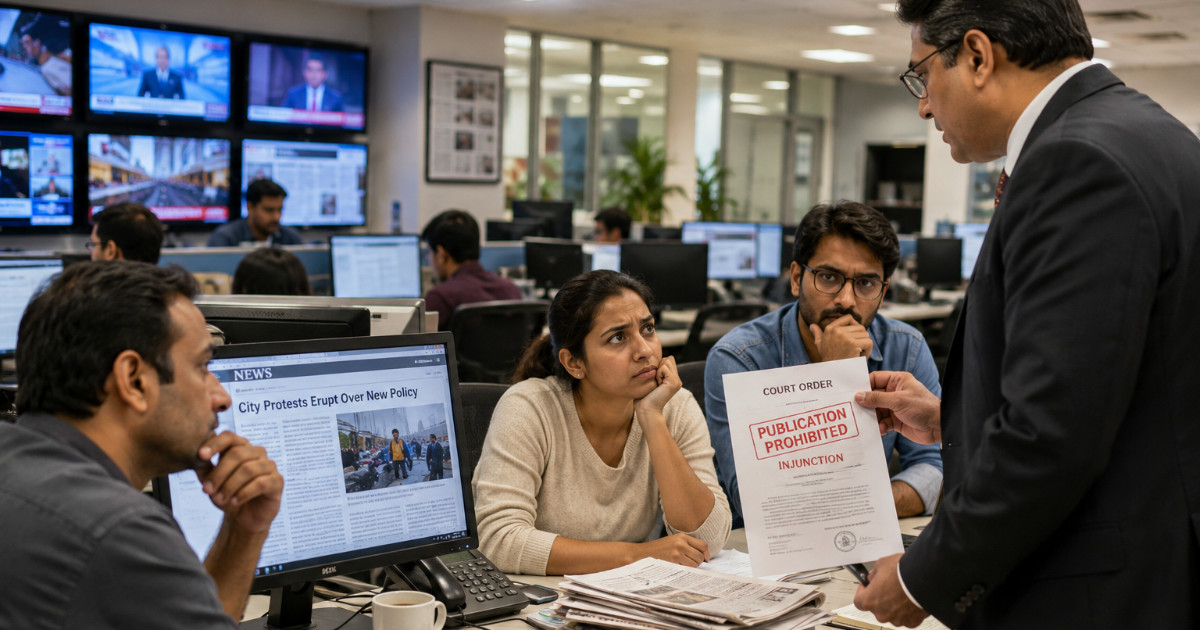
NEW DELHI - The Committee to Protect Journalists (CPJ) Thursday condemned a decision by India's judiciary to proceed with a criminal defamation complaint against The Wire and issue an injunction preventing the news website from reporting about Jay Shah, the son of the ruling BJP party's President Amit Shah, while the defamation case is being heard.
On October 12, an Ahmedabad court issued an injunction barring The Wire from writing about Jay Shah's businesses "so that the right to live with dignity of the plaintiff (Jay) may be protected," according to a report in The Indian Express. The news website learned of the injunction only after being sent a copy of the order, according to a statement published by The Wire on October 16.
The injunction was issued as part of a criminal defamation case that Jay Shah filed against the news website on October 11. The legal action is related to an October 8 report in The Wire about the turnover of Jay Shah's company, Temple Enterprises, since Narendra Modi became prime minister and his father became party leader.
A Gujarat court issued a summons for those named in the criminal defamation complaint to appear on November 13, according to news reports. If convicted, the journalists could be jailed for up to two years, or fined. One of the The Wire's founding editors, Siddharth Varadarajan, who is named in the complaint, told CPJ via email that The Wire would challenge the injunction.
"A democracy like India should not use criminal defamation proceedings and censorship to resolve publishing disputes," CPJ Asia Program Coordinator Steven Butler said from New York. "Rather than shutting down reporting by The Wire, Indian authorities should take steps to change the country's outdated defamation laws."
The defamation complaint was filed under sections 500 [criminal defamation], 109 [abetment], 39 [voluntarily causing grievous hurt] and 120B [criminal conspiracy] and names the Foundation for Independent Journalism, the non-profit that publishes the website; The Wire's founding editors Varadarajan, Sidharth Bhatia, and MK Venu; Rohini Singh, a reporter; Pamela Philipose, a public editor; and managing editor Monobina Gupta, according to a report in the Business Standard.
The injunction bars The Wire from publishing further stories on Shah's business for the duration of the criminal defamation trial, but it did not require the news website to remove stories already posted, according to Varadarajan.
Nirupam Nanavati, a lawyer representing Jay Shah, defended the use of the injunction. Nanavati told CPJ, "Once you write or speak [about a person], you might issue a denial but the injury caused to the person is irreversible and irreparable and can't be compensated in terms of money."
The Wire has faced ex-parte injunctions - an injunction in which only one party is heard - previously. In March, CPJ documented how a Bangalore city civil court issued an ex-parte injunction ordering The Wire to take down two articles critical of Rajeev Chandrasekhar, a member of India's upper house of parliament.
Separately, in August, CPJ documented how the Karkardooma District Court in Delhi issued an injunction that restrained Juggernaut Books from publishing Godman to Tycoon: The Untold Story of Baba Ramdev, after the guru filed a complaint. – CPJ News Alert
Key Points
- Indian court issues injunction against The Wire.
- Injunction prevents reporting on Jay Shah's businesses.
- Defamation complaint related to a report on Shah's company turnover.
- CPJ criticizes the use of criminal defamation in media disputes.
- The Wire plans to challenge the injunction in court.
Relevant Topics
Ask AI: Understand this story your way
AI EnabledDig deeper, ask anything — get instant context, background, and clarity.
Disclaimer: This feature is powered by AI and is intended to help readers explore and understand news stories more easily. While we strive for accuracy, AI-generated responses may occasionally be incomplete or reflect limitations in the underlying model. This feature does not represent the editorial views of JournalismPakistan. For our full, verified reporting, please refer to the original article.