
The invisible hand: How censorship shapes Pakistani journalism today
JournalismPakistan.com | Published last year | Omar Malik
Join our WhatsApp channel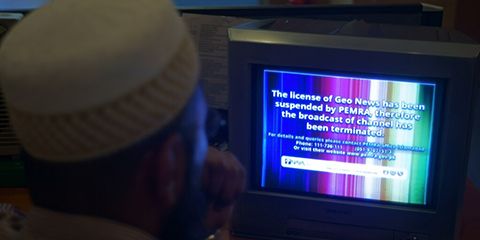
ISLAMABAD—In Pakistan, censorship remains a pervasive challenge, significantly affecting the landscape of media and journalism. The practice of restricting information, controlling media narratives, and limiting free speech has profound implications for press freedom and democratic values in the country. This article delves into the intricate dynamics of censorship in Pakistani media, examining the challenges faced by journalists and the broader societal consequences.
Censorship in Pakistan has deep roots, tracing back to various military and civilian regimes that have sought to control the flow of information. From the era of General Zia-ul-Haq's stringent media restrictions to the more recent measures under democratic governments, censorship has evolved but remains a tool for those in power to maintain control. The advent of digital media has introduced new dimensions to censorship, with the state employing sophisticated technology to monitor and suppress dissenting voices online.
Challenges Faced by Journalists
Journalists in Pakistan operate under constant threat of censorship, which manifests in several forms:
Government Pressure: Authorities often exert pressure on media houses to tow the official line, threatening legal action, or revoking licenses of non-compliant outlets.
Violence and Intimidation: Reporters and media personnel frequently face threats, violence, and even assassination attempts. The fear of retribution stifles investigative journalism and promotes self-censorship.
Economic Constraints: Financial pressures and advertising boycotts orchestrated by the state or influential groups serve as indirect means of censorship, forcing media outlets to conform or face closure.
Impact on Press Freedom
The consequences of censorship in Pakistan are far-reaching, affecting not only the media landscape but also the broader societal fabric:
Erosion of Trust: When media outlets are perceived as mouthpieces of the state, public trust in the press diminishes, leading to an uninformed and misinformed populace.
Stifling Dissent: Censorship suppresses critical voices and dissent, undermining the role of media as a watchdog of democracy and hindering social and political reforms.
Cultural Homogenization: The restriction of diverse viewpoints leads to a homogenized media environment, where only state-approved narratives prevail, stifling creativity and intellectual discourse.
Broader Societal Implications
The impact of media censorship extends beyond the press, influencing various aspects of society:
Democratic Backsliding: Free and independent media is a cornerstone of democracy. Censorship undermines democratic processes, enabling authoritarian tendencies and weakening institutional checks and balances.
Social Polarization: The suppression of alternative viewpoints fosters a polarized society, where individuals are exposed only to echo chambers that reinforce their existing beliefs.
Human Rights Violations: Censorship often accompanies broader human rights abuses, including the suppression of freedom of expression, assembly, and association.
The Way Forward
Addressing the issue of censorship in Pakistani media requires a multifaceted approach:
Legal Reforms: Enacting and enforcing laws that protect press freedom and prevent arbitrary censorship is crucial. This includes safeguarding journalists' rights and ensuring their safety.
Civil Society Engagement: Active participation of civil society organizations in advocating for press freedom and holding authorities accountable is essential for sustaining democratic values.
International Support: Global media watchdogs, human rights organizations, and democratic nations must continue to pressure the Pakistani government to uphold press freedom and respect international standards.
Censorship in Pakistani media presents significant challenges to press freedom, with profound consequences for democracy and societal well-being. Addressing these issues requires concerted efforts from legal, civil, and international spheres to ensure a free and independent press that can serve its vital role in society.
About the author: Omar Malik is a freelance writer with an interest in journalism and social media.
Photo: AP