
Afghan media group condemns arrests and expulsion in Islamabad Internet shutdowns choke reporting from Iran protests Hong Kong court weighs sentencing in Jimmy Lai security case UNESCO warns South Korea's fake news law risks press freedom Turkey honors journalists on Working Journalists’ Day Pakistan journalists face deepening welfare crisis, PFUJ-Workers warns Independent U.S. journalists reshape news ecosystem Venezuelan editors in exile join forces to report crisis RSF launches Iran media help desk for journalists Iran communications blackout deepens media repression, RSF warns Afghan media group condemns arrests and expulsion in Islamabad Internet shutdowns choke reporting from Iran protests Hong Kong court weighs sentencing in Jimmy Lai security case UNESCO warns South Korea's fake news law risks press freedom Turkey honors journalists on Working Journalists’ Day Pakistan journalists face deepening welfare crisis, PFUJ-Workers warns Independent U.S. journalists reshape news ecosystem Venezuelan editors in exile join forces to report crisis RSF launches Iran media help desk for journalists Iran communications blackout deepens media repression, RSF warns
Logo
Janu
Cruel Cuts

No news is good news?

 JournalismPakistan.com |  Published: 22 March 2014 |  Daud Malik

Join our WhatsApp channel
No news is good news?
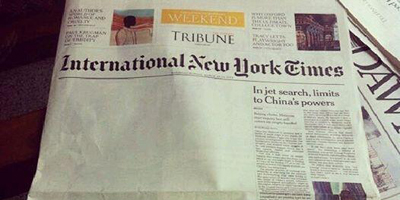
The International New York Times's Asian edition displayed notable white space, reminiscent of past military censorship in Pakistan. This absence of content has sparked debate among journalists and viewers alike.

ISLAMABAD: For many in Pakistan, the huge “white space” on the front page of the International New York Times’ Asian edition on Saturday brought back memories of days when this ploy was frequently used by the military regimes.

Almost quarter of the front page of INYT Asian edition accompanying The Express Tribune has white space for Pakistani readers, not publishing a picture of two young men in Quetta, claiming they are Taliban and Carlotta Gall’s story – What Pakistan knew about Bin Laden.

The story widely quoted in Pakistani press has already been denied by ISPR.

Along with “advices” from the military regimes, the history of Pakistani journalism is replete with instances of white space. In other words, publishing nothing to replace a news item rejected by official “press advisers”.

The white space to hide the OBL story already widely quoted, read and denied however, did not go unnoticed. Rob Crilly, Pakistan and Afghanistan correspondent of The Telegraph, tweeted: “International New York Times redesign is excellent. More white space makes it easier on the eye than usual dense text.”

Anchor Taha Siddique asks Zarrar Khuhro if this was “Mrkting censorship or actual censorship?” And some tweeters saw it as “no news is good news”.

KEY POINTS:

  • INYT's Asian edition had significant white space on the front page.
  • Discussion about censorship arose due to the omission of the Bin Laden story.
  • Rob Crilly praised the redesign, emphasizing improved readability.
  • The white space has historical ties to military regimes' media control in Pakistan.
  • Public reactions varied from marketing strategies to outright censorship.

Don't Miss These

Newsroom
Afghan media group condemns arrests and expulsion in Islamabad

Afghan media group condemns arrests and expulsion in Islamabad

 January 12, 2026 AMSO condemned arrests and the deportation of Afghan journalists by Pakistani police in Islamabad, calling the actions illegal and a threat to press freedom.


Internet shutdowns choke reporting from Iran protests

Internet shutdowns choke reporting from Iran protests

 January 12, 2026 Internet shutdowns and network throttling in Iran are crippling journalists and media, impeding reporting, verification and sharing of protest information.


Hong Kong court weighs sentencing in Jimmy Lai security case

Hong Kong court weighs sentencing in Jimmy Lai security case

 January 12, 2026 High Court hearings began to sentence Jimmy Lai and co-defendants convicted under Hong Kong's national security law, with potential life terms and implications for press freedom.


UNESCO warns South Korea's fake news law risks press freedom

UNESCO warns South Korea's fake news law risks press freedom

 January 12, 2026 UNESCO warns South Korea's new 'fake news' law uses vague definitions and broad enforcement powers that could erode press freedom and spur self-censorship.


Turkey honors journalists on Working Journalists' Day

Turkey honors journalists on Working Journalists' Day

 January 11, 2026 Turkey observed Working Journalists' Day on Jan. 10 with official tributes, praising reporters' work and press freedom amid concerns over media restrictions.


Popular Stories