.png)
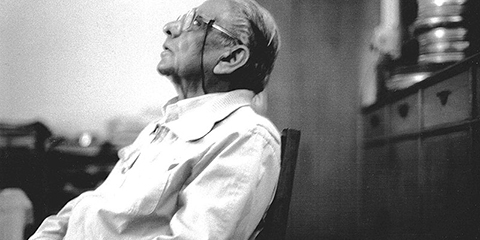
Imtiaz Sipra (1938-2001)
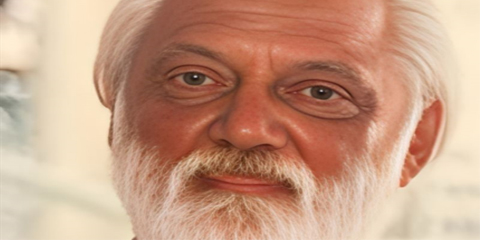
White hair flying with the first touch of air, drooping moustache pure silver with a touch of brown in the middle – brown due to burnt hair because of excessive smoking, Imtiaz Sipra was a phenomenal writer.
Born in Rangoon in 1938, Sipra had a never-ending passion for sports. He was a different character; difficult to understand and hard to come to grips with. His level of thinking was inconceivably high and his expression simply a poetic frenzy which would leave the ardent readers in a trance.
Sipra didn’t write for commoners; he wrote for people who adhered to orthodox Edwardian expression and appreciated satire.
His writing was a subject about which most people know very little. It was reputed to be abstruse, dark and obscure - a mysterious combination of psychology, theology, a predictive, mellow-dramatic narration of events.
Sipra was a man of great wisdom. Oddly enough, he was considered of no practical value because of his abrasive nature and his ability to annoy people. However, he was of tremendous value for those who followed cricket passionately.
There were misconceptions about his personality which need to be dispelled. He was an amazingly loving father, a teacher and an honest man who sporadically behaved intangibly under the influence of alcohol. His lust for drinks to an extent of habituation and chain-smoking took the zing out of his life.
Having started to drink and smoke as part of teenage frivolities, Sipra became dependent and that took the gloss off his most charming self. When Sipra was his real self, he was an institution. He could be a philosopher amongst the journalist glitterati and a story-teller amongst colleagues covering cricket matches or other sports events.
Sipra was extravagant and a multi-talented man. He also covered golf, bridge, polo, athletics and boxing.
At the time of his death in July 2001 of cardiac arrest, Sipra was serving as the Sports Editor of The News Lahore.
After the death of his wife in 1999, Sipra had become forlorn, mostly submerged in alcohol. He loved his two daughters and often pulled up his son Adnan, himself a fine journalist.
Sipra’s last cricketing stints as a journalist were in West Indies in 200 and England 2001. A damn good writer, he will long be remembered for his typical columns, full of enterprise and satire.
Source: The Fluctuating Fortunes
Maulana Salahuddin Ahmad (1902-1964)
Maulana Salahuddin Ahmad, editor of one of the most prestigious journals, Adabi Dunya, was born on March 25, 1902. According to Rauf Parekh, he was not 'Maulana' in the sense that the word is
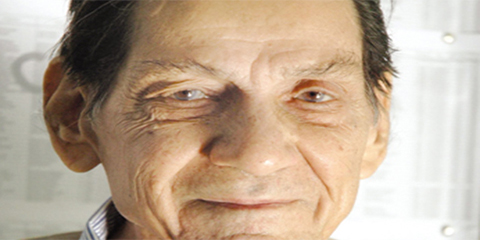
Minhaj Barna (1925-2011)
The death of Minhaj Barna in Rawalpindi at the age of 87 on January 14, 2011 marked the end of an era.Even journalists who had never met him in person were familiar with his name and his
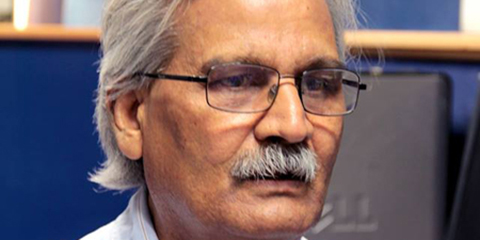
Nasir Zaidi
On May 13, 1978, four journalists courted arrest at the offices of Musawaat, among them was Nasir Zaidi, a quiet, unassuming and physically frail individual. They were driven away in chains for
Anwar Ali (1922-2004)
Anwar Ali, creator of famous character Nanna, was the first newspaper cartoonist associated with The Pakistan Times. Born on April 18, 1922 in Ludhiana, his association with this newspaper
I A Rehman
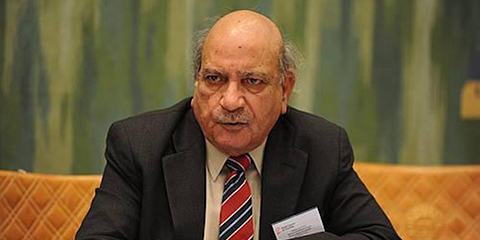
A senior journalist and human rights activist, I A Rehman is known for his outspoken views. He served as editor-in-chief of The Pakistan Times from 1989-90. Since 1990 he has been serving as a director
Majid Nizami (1928-2014)
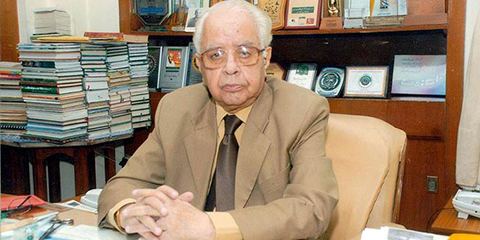
Editor-in-chief and publisher of Nawa-i-Waqt, Majid Nizami was in the field of journalism for almost half a century. He was born in Sangla Hill in Sheikhupura, Punjab, and got his early education
Zafar Iqbal Mirza
In the preface of Last Man, a compilation of his columns, Zafar Iqbal Mirza remembers his more than 42 years in journalism as "well and truly through the mill." His Lahori columns are a window

Mushahid Hussain Sayed
Mushahid Hussain Sayed has the distinction of becoming the youngest editor of a national English daily The Muslim (now defunct). He achieved this honor at the age of 29 in 1982.
Newsroom

Pele to Messi: How World Cup finals wrote football's greatest story
June 15, 2026 From Pele to Messi, World Cup finals shaped football's global story, tracing triumphs and heartbreaks and showing how the game became a shared language.
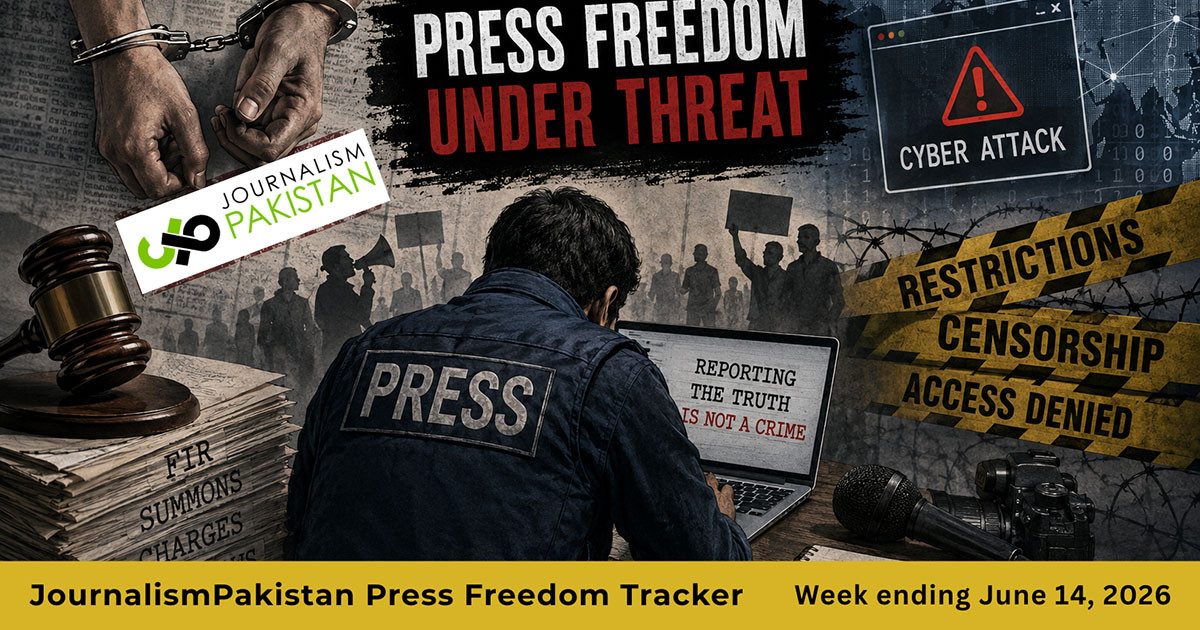
Press freedom review: From jail cells to cyberspace, threats to journalists multiply
June 14, 2026 Press freedom faces mounting challenges worldwide as journalists confront arrests, legal pressure, cyberattacks, online harassment, deportations, and reporting restrictions across multiple countries.

The right to know: Comparing access-to-information laws across Asia
June 14, 2026 Across Asia, RTI laws range from effective tools for journalism and accountability to paper laws weakened by bureaucracy, broad exemptions and poor enforcement.

Open-Source Intelligence (OSINT): How journalists verify information in the digital age
June 14, 2026 OSINT helps journalists verify social media, photos, videos, maps and public records to improve reporting accuracy and detect misinformation.
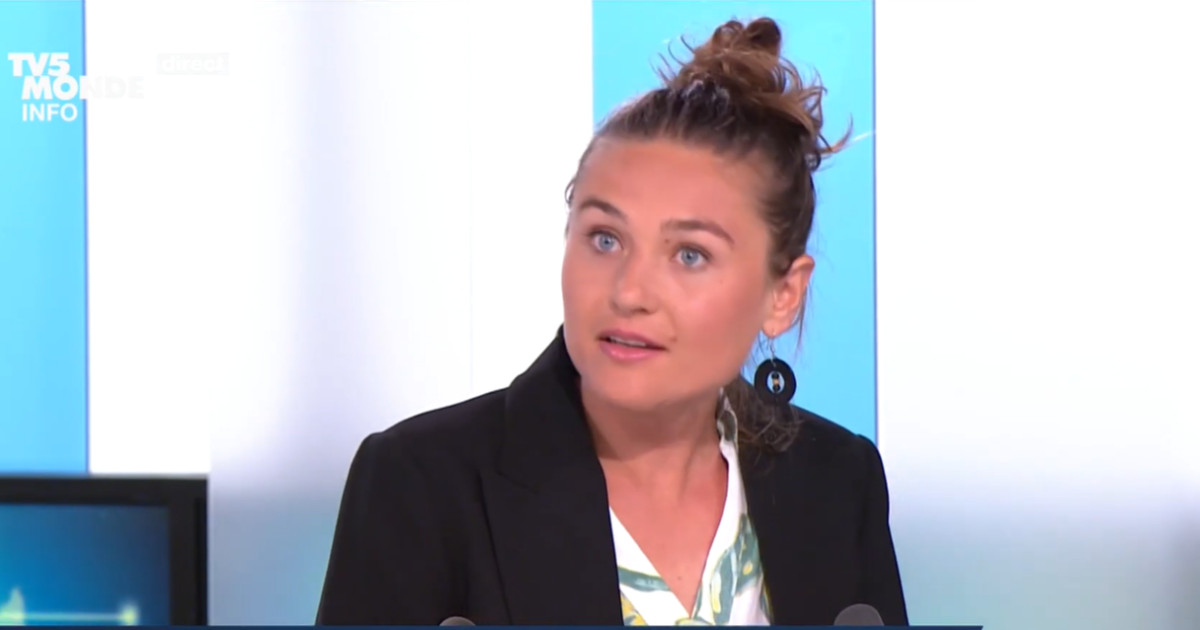
Ethiopia expels French journalist after Tigray reporting
June 13, 2026 Ethiopia expelled French reporter A. Passilly after Tigray reporting, drawing criticism from press groups as retaliatory and damaging to press freedom.
Popular Stories

Why publishers want AI companies to pay
Jun 06, 2026