.png)
Belarus adds former Intex-Press journalists to extremist list
JournalismPakistan.com | Published: 18 November 2025 | JP Global Monitoring
Join our WhatsApp channel
Four former journalists from Intex-Press have been classified as extremists in Belarus, following their conviction for facilitating extremist activity. This action is part of a larger pattern of repression against independent journalism in the country.Summary
MINSK — Four former staff members of the Baranavichy-based independent newspaper Intex-Press have been added to the Interior Ministry’s extremist list, intensifying Belarus’s ongoing crackdown on independent media. The individuals designated are Natallia Semianovich, Mikita Piatrouski, Ruslan Raviaka, and Liudmila Zeliankova, according to a report by nashaniva.com.
Their cases date back to December 2024, when all four were arrested during a broader campaign against independent journalism. In August 2025, the Brest Regional Court convicted them under Article 361-4 for allegedly facilitating extremist activity. Prosecutors applied Part 2 of the article, commonly used when alleged offenses involve a group, allowing for harsher penalties.
All four journalists were sentenced to “home chemistry,” a form of house arrest that includes compulsory labor. Earlier this year, the verdict officially entered into legal force, formally placing the journalists under long-term restrictions.
Former colleagues from Intex-Press continue to face imprisonment, including former director Uladzimir Yanukevich, underscoring the sustained pressure on the outlet. Founded in 1994, Intex-Press grew into Belarus’s leading independent regional media organization before being forcibly dismantled in 2021 as part of a wider governmental assault on critical reporting.
International concern over press crackdown
The case has drawn sharp criticism from the Committee to Protect Journalists. In a statement, the organization urged Belarusian authorities to revoke the sentences and cease criminalizing journalistic work. CPJ noted that on August 19 a court handed down sentences of two to three years of house arrest and imposed fines of 21,000 Belarusian rubles (approximately US$6,160) on each journalist.
CPJ’s Europe and Central Asia program coordinator, Gulnoza Said, described the sentences as a blatant injustice and said extremism charges were being misused to silence the press.
A broader assault on independent reporting
The convictions reflect a wider pattern in Belarus, where dozens of journalists have faced arrests, raids, and prosecutions since 2020. Independent outlets have been shuttered, and entire newsroom teams have fled or been forced underground. The addition of the four former Intex-Press staff members to the extremist list expands long-term consequences for their employment, movement, and security.
The actions taken against Intex-Press and its former staff illustrate the escalating risks for journalists in Belarus and highlight ongoing concerns about repression of dissent and independent reporting.
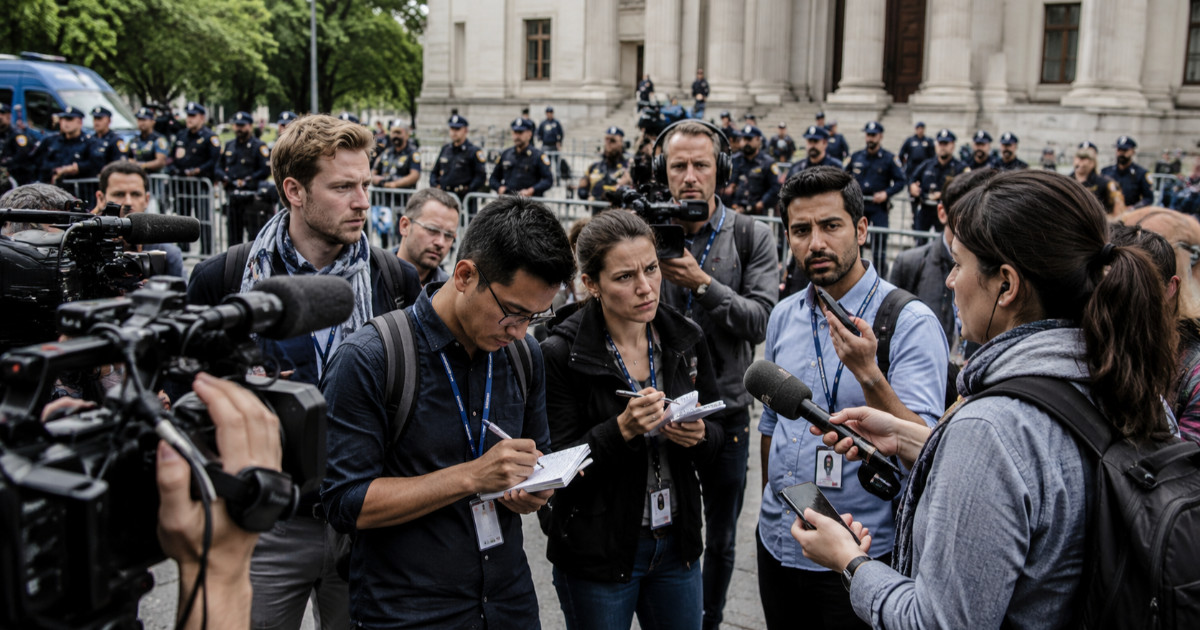
PHOTO: AI-generated
Key Points
- Four former Intex-Press journalists added to Belarus's extremist list
- Convicted under Article 361-4 for facilitating extremist activity
- Sentences include two to three years of house arrest and fines of 21,000 Belarusian rubles
- CPJ criticized the verdicts as an attack on press freedom
- Intex-Press, founded in 1994, was dismantled in 2021 due to government repression.
Relevant Topics
Ask AI: Understand this story your way
AI EnabledDig deeper, ask anything — get instant context, background, and clarity.
Disclaimer: This feature is powered by AI and is intended to help readers explore and understand news stories more easily. While we strive for accuracy, AI-generated responses may occasionally be incomplete or reflect limitations in the underlying model. This feature does not represent the editorial views of JournalismPakistan. For our full, verified reporting, please refer to the original article.