
BBC stands for...what now? Pakistan's most confusing media mix-up gets messier
JournalismPakistan.com | Published: 6 September 2025 | JP Staff Report
Join our WhatsApp channel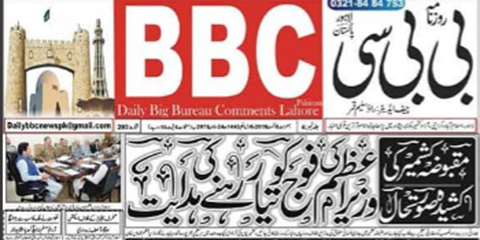
The BBC faces ongoing brand impersonation issues in Pakistan, complicating its public image. A fake channel's recent claims raise trademark law concerns.Summary
ISLAMABAD — The British Broadcasting Corporation's ongoing battle against brand impersonators in Pakistan has taken a particularly amusing turn, revealing a perfect storm of acronym confusion that would make even the most seasoned media lawyer chuckle nervously.
Following the recent incident where a fake social media channel branded itself as "BBC Urdu News Punjab," an interesting discovery emerged: a legitimate daily newspaper from Lahore called "Big Bureau Comments" (BBC) has been operating independently. But the plot thickens. Pakistan's BBC landscape includes even more players: Daily BBC Islamabad, BBC Headlines from Lahore, BBC Urdu Lahore, BBC News Multan, and Roznama BBC Urdu all exist as separate publications.
The timeline of recent events reads like a comedy of errors with serious implications. Last month, BBC Urdu officially disowned the fraudulent "BBC Urdu News Punjab TV," emphasizing that audiences should verify news only through official BBC platforms. The British Broadcasting Corporation warned that the channel was completely unaffiliated with its operations.
Just one day later, the fake channel attempted damage control with a creative rebranding explanation, claiming their "BBC" actually stood for "Bhai Bhai Channel" – a move that might win points for quick thinking but loses significantly more for trademark law compliance.
The real BBC however, successfully struck down the imposter Pakistani channel for brand misuse. The Bhai Bhai Channel then found itself pleading for revival on YouTube and TikTok platforms after facing the full force of trademark infringement and brand misuse enforcement actions.
This recent incident, however, represents just the latest chapter in a long-running saga. BBC's brand protection concerns in Pakistan stretch back to 2018, when the broadcaster issued cautionary notices in Dawn newspaper against individuals falsely claiming BBC affiliations on social media platforms. Legal representatives emphasized that such misuse could "cause great harm to the public at large."
The broadcaster doubled down in 2019 with additional public notices, promising robust civil and criminal action against impostors while urging the public to verify content directly from official BBC channels and report suspicious activity.
The persistence of these brand misuse cases highlights the broader challenges international media organizations face in protecting their reputation across different markets, while also demonstrating the creative lengths some will go to capitalize on established brand recognition, even when it leads them into legal hot water. For media consumers in Pakistan, the message remains clear: when in doubt about BBC content, stick to the original, the one that doesn't need to explain what its acronym really means after getting caught.
Key Points
- BBC Urdu disavowed the fake 'BBC Urdu News Punjab' channel.
- Various legitimate newspapers share the 'BBC' acronym in Pakistan.
- Brand misuse cases have persisted since 2018, prompting legal action.
- The imposter channel attempted damage control by rebranding.
- Audiences are advised to verify news through official BBC channels.
Ask AI: Understand this story your way
AI EnabledDig deeper, ask anything — get instant context, background, and clarity.
Disclaimer: This feature is powered by AI and is intended to help readers explore and understand news stories more easily. While we strive for accuracy, AI-generated responses may occasionally be incomplete or reflect limitations in the underlying model. This feature does not represent the editorial views of JournalismPakistan. For our full, verified reporting, please refer to the original article.