
Thai columnist Pravit Rojanaphruk charged with two cases of sedition
JournalismPakistan.com | Published: 8 August 2017
Join our WhatsApp channel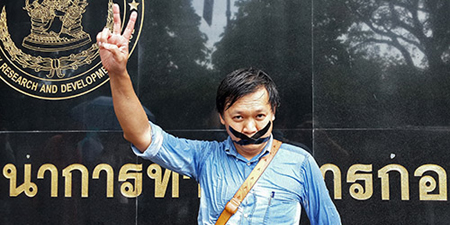
Pravit Rojanaphruk, a prominent Thai columnist, faces sedition charges for critical social media posts. The Committee to Protect Journalists demands immediate action to uphold press freedom.Summary
WASHINGTON - Thai authorities should immediately and unconditionally drop all charges against Pravit Rojanaphruk, a columnist at the news website Khaosod English, and allow the journalist to work freely and without further harassment, the Committee to Protect Journalists said Tuesday.
Pravit, whom CPJ will honor with its International Press Freedom Award this year, wrote on Twitter that the Royal Thai Police’s Technology Crime Suppression Division formally informed him that he faces charges of sedition, as defined under article 116 of Thailand’s Criminal Code, and disseminating false information online, under the Computer Crimes Act.
Pravit told CPJ that the first sedition charge stems from Facebook posts he wrote on February 16 and 17, 2015, in which he raised critical questions about a military-drafted constitution that passed later that year in a national referendum and Prime Minister Prayuth Chan-ocha’s frequently delayed plans for new elections, among other topics related to the military government’s legitimacy. At the time, Prayuth had said he would no longer take questions from the press.
The second sedition charge, Pravit told CPJ, stems from five Facebook posts he wrote in recent weeks on various widely reported news events, including the ongoing criminal negligence trial of former Prime Minister Yingluck Shinawatra, whose government the military coup toppled, Prayuth’s handling of recent floods, and a soldier’s threat to confiscate a local TV news reporter’s equipment.
“The sedition charges filed today against columnist Pravit Rojanaphruk mark a new low in the Thai junta’s abuse of overbroad laws to stifle press freedom,” said Steven Butler, CPJ’s Asia program coordinator. “We call on authorities to drop these charges before they do any more damage to Thailand’s international credibility and reputation under military rule.”
The charges were lodged at the Royal Thai Police’s Technology Crime Suppression Division, according to Pravit. Sedition charges carry maximum jail sentences of seven years, with a maximum allowable sentence of 20 years for multiple counts. Pravit’s Twitter post said he faces a maximum 14 years in prison if found guilty in both sedition cases. His post from the police station today included a picture of the reporter, his hands stained with ink after police fingerprinted him.
Pravit told CPJ that he must report to police again on August 18 to hear a clarification of the Computer Crime Act charges that he spread false information online. Thailand’s attorney general must approve sedition charges before cases move to trial.
CPJ last month announced that Pravit will be one of four recipients of its 2017 International Press Freedom Award, given each year to journalists for their courageous reporting.
Military authorities have singled out Pravit for harassment since they seized power in a May 2014 coup. He has been temporarily detained on two occasions, once in May 2014 and again in September 2015, in retaliation for his critical commentary on military rule.
Upon his release after his second detention, military officials threatened to freeze his bank account if he continued to criticize the regime, he told CPJ at the time. As a condition of his release, he was forced to sign a pledge that he would not become involved in any activities opposing military rule. – A CPJ news alert/Image: CPJ
Key Points
- Pravit Rojanaphruk faces two charges of sedition under Thailand's Criminal Code.
- The charges relate to his Facebook posts questioning military governance.
- CPJ emphasizes the need to drop the charges to protect press freedom.
- Sedition charges can lead to a maximum prison sentence of 14 years.
- Rojanaphruk has been previously targeted for his critical journalism.
Relevant Topics
Ask AI: Understand this story your way
AI EnabledDig deeper, ask anything — get instant context, background, and clarity.
Disclaimer: This feature is powered by AI and is intended to help readers explore and understand news stories more easily. While we strive for accuracy, AI-generated responses may occasionally be incomplete or reflect limitations in the underlying model. This feature does not represent the editorial views of JournalismPakistan. For our full, verified reporting, please refer to the original article.