Amar Guriro: Journalism's future is human-AI partnership The JournalismPakistan Global Media Brief | Edition 23 | June 5, 2026 As AI reshapes news, publishers seek a sustainable future Every frame at a cost: The safety crisis facing Pakistan's camerapersons Why journalists are increasingly targeted in conflict zones What the 60 Minutes controversy means for TV journalism Zee secures FIFA World Cup rights in India through 2030 How fact-checkers verify viral videos during breaking news Pentagon restrictions on reporters draw media backlash Israel-Lebanon talks proceed as conflict hinders reporting Why governments are tightening controls on foreign journalists China condemns US restrictions on Xinhua reporter Taiwan condemns China over New York Times reporter expulsion The biggest threats facing journalism in Asia today Press freedom review: The many faces of pressure on the press Amar Guriro: Journalism's future is human-AI partnership The JournalismPakistan Global Media Brief | Edition 23 | June 5, 2026 As AI reshapes news, publishers seek a sustainable future Every frame at a cost: The safety crisis facing Pakistan's camerapersons Why journalists are increasingly targeted in conflict zones What the 60 Minutes controversy means for TV journalism Zee secures FIFA World Cup rights in India through 2030 How fact-checkers verify viral videos during breaking news Pentagon restrictions on reporters draw media backlash Israel-Lebanon talks proceed as conflict hinders reporting Why governments are tightening controls on foreign journalists China condemns US restrictions on Xinhua reporter Taiwan condemns China over New York Times reporter expulsion The biggest threats facing journalism in Asia today Press freedom review: The many faces of pressure on the press
Logo
Janu
Journalism Pakistan Authority

New Digital Media Bill targets obscenity and indecency online

 JournalismPakistan.com |  Published: 19 August 2025 |  JP Staff Report

Join our WhatsApp channel

New Digital Media Bill targets obscenity and indecency online
The Prevention of Obscenity and Indecency in Digital Media Bill seeks to create a regulatory framework for online content in Pakistan. Introduced by MNA Shahida Rehmani, it aims to protect youth from harmful digital content.

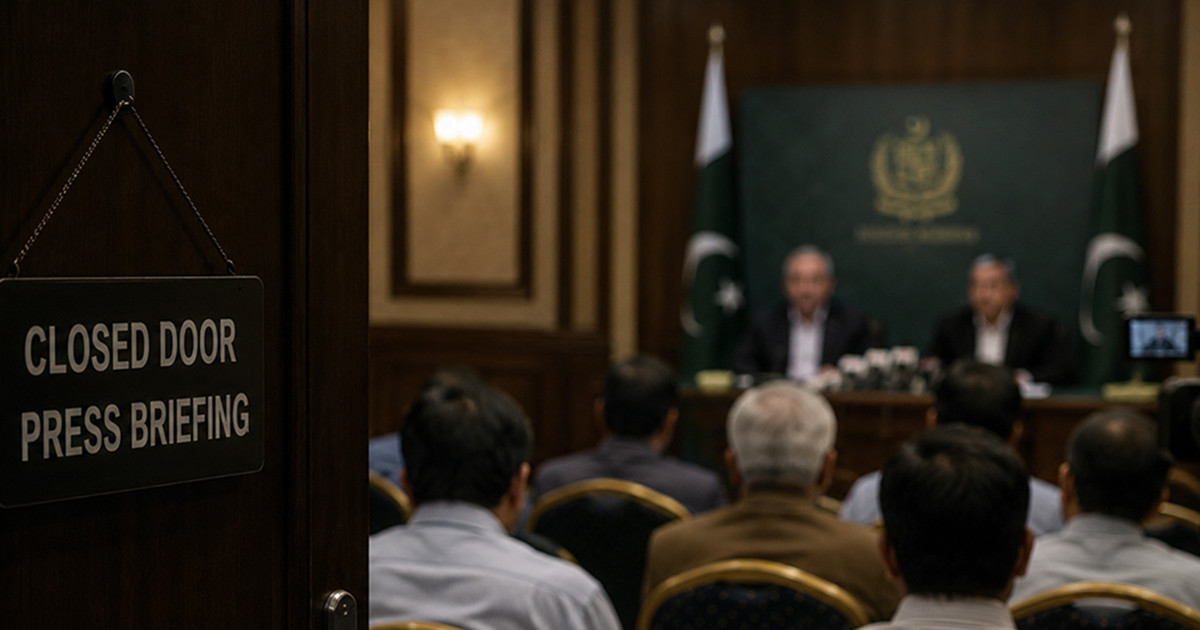
ISLAMABAD — A private member’s bill tabled in the National Assembly seeks to regulate digital and visual media content in Pakistan, aiming to curb what it terms “obscene and indecent material” that could harm the country’s youth.

The Prevention of Obscenity and Indecency in Digital Media Bill, 2025, introduced by MNA Shahida Rehmani, highlights that the rapid spread of digital platforms—including social media, streaming services, and mobile applications—has made content widely accessible without proper oversight.

“While these platforms offer opportunities for education, expression, and entertainment, they have also facilitated the dissemination of obscene, indecent, and morally injurious content that threatens the ideological foundations of the state, undermines Islamic social values, and negatively impacts public morality—particularly among the youth,” the bill states.

It stresses that no clear regulatory framework currently exists for non-licensed platforms such as over-the-top (OTT) services, user-generated video platforms, and online streaming. Current laws, including the PEMRA Ordinance 2002 and the Prevention of Electronic Crimes Act 2016, are described as insufficient to address these challenges.

The draft law proposes creating a new authority to “regulate and monitor digital and visual content to ensure compliance with the provisions of this act.” The authority would be empowered to issue rules, guidelines, directives, and standards for platforms, creators, and service providers, while working with the Pakistan Telecommunication Authority (PTA) to impose technical restrictions where needed.

It further suggests forming a Digital Content Evaluation Board composed of experts from diverse fields to review complaints, referrals, or suo motu cases and recommend blocking, removing, restricting, or categorizing objectionable content.

If passed, the bill would mark Pakistan’s first comprehensive legal framework dedicated specifically to regulating digital and visual media content for obscenity and indecency.

Key Points

  • Bill introduced in the National Assembly to regulate digital media.
  • Targets obscene and indecent content on social media and streaming services.
  • Proposes the creation of a new authority for content regulation.
  • Calls for a Digital Content Evaluation Board for reviewing complaints.
  • Aims to protect public morality and uphold Islamic social values.

Ask AI: Understand this story your way

AI Enabled

Dig deeper, ask anything — get instant context, background, and clarity.

Not sure what to choose? Try one of these.

The AI generates results based on your selected options
Your AI-generated results will appear here after you click the button.

Disclaimer: This feature is powered by AI and is intended to help readers explore and understand news stories more easily. While we strive for accuracy, AI-generated responses may occasionally be incomplete or reflect limitations in the underlying model. This feature does not represent the editorial views of JournalismPakistan. For our full, verified reporting, please refer to the original article.

Dive Deeper

Newsroom
Amar Guriro: Journalism's future is human-AI partnership

Amar Guriro: Journalism's future is human-AI partnership

 June 05, 2026 Amar Guriro, founder of Pakistan's first AI-powered news platform, says journalism's future rests on human-AI collaboration to improve reporting while preserving editorial oversight.


The JournalismPakistan Global Media Brief | Edition 23 | June 5, 2026

The JournalismPakistan Global Media Brief | Edition 23 | June 5, 2026

 June 05, 2026 Global Media Brief reviews pressures reshaping journalism, press freedom, AI and platform power, and reports BBC's Emmy, 60 Minutes turmoil and Taiwan's protest.


As AI reshapes news, publishers seek a sustainable future

As AI reshapes news, publishers seek a sustainable future

 June 05, 2026 At the World News Media Congress in Marseille, publishers discussed how generative AI is altering newsroom workflows, audience engagement and content licensing.


Why journalists are increasingly targeted in conflict zones

Why journalists are increasingly targeted in conflict zones

 June 04, 2026 Journalists in conflict zones face rising danger as combatants, states and militias increasingly target independent reporting to control narratives.


What the 60 Minutes controversy means for TV journalism

What the 60 Minutes controversy means for TV journalism

 June 03, 2026 The 60 Minutes controversy at CBS exposes tensions over leadership, editorial independence and pressures on legacy TV journalism amid political polarization.


Popular Stories