
Amar Guriro: Journalism's future is human-AI partnership The JournalismPakistan Global Media Brief | Edition 23 | June 5, 2026 As AI reshapes news, publishers seek a sustainable future Every frame at a cost: The safety crisis facing Pakistan's camerapersons Why journalists are increasingly targeted in conflict zones What the 60 Minutes controversy means for TV journalism Zee secures FIFA World Cup rights in India through 2030 How fact-checkers verify viral videos during breaking news Pentagon restrictions on reporters draw media backlash Israel-Lebanon talks proceed as conflict hinders reporting Why governments are tightening controls on foreign journalists China condemns US restrictions on Xinhua reporter Taiwan condemns China over New York Times reporter expulsion The biggest threats facing journalism in Asia today Press freedom review: The many faces of pressure on the press Amar Guriro: Journalism's future is human-AI partnership The JournalismPakistan Global Media Brief | Edition 23 | June 5, 2026 As AI reshapes news, publishers seek a sustainable future Every frame at a cost: The safety crisis facing Pakistan's camerapersons Why journalists are increasingly targeted in conflict zones What the 60 Minutes controversy means for TV journalism Zee secures FIFA World Cup rights in India through 2030 How fact-checkers verify viral videos during breaking news Pentagon restrictions on reporters draw media backlash Israel-Lebanon talks proceed as conflict hinders reporting Why governments are tightening controls on foreign journalists China condemns US restrictions on Xinhua reporter Taiwan condemns China over New York Times reporter expulsion The biggest threats facing journalism in Asia today Press freedom review: The many faces of pressure on the press
Logo
Janu
Women in Media

Giving people's money to private media, not the government's mandate: minister

 JournalismPakistan.com |  Published: 22 November 2018

Join our WhatsApp channel
Giving people's money to private media, not the government's mandate: minister
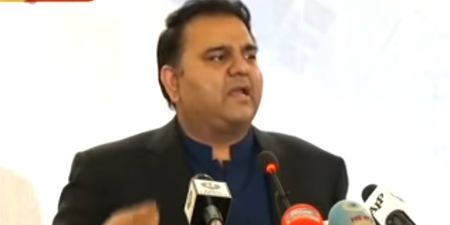
Federal Information Minister Fawad Chaudhry discusses the challenges faced by media owners due to unsustainable business practices. He stresses the importance of adapting business models to survive in a changing economic landscape.

ISLAMABAD – Federal Information Minister Fawad Chaudhry said on Thursday the biggest danger to media owners today was from their own business models.

Speaking at a Conference on National Security, Nation-Building and Mass Media, he said no industry could bank on budgets from the government. “We will not be able to do it because of our economic conditions.”

He made it clear that even if the financial situation were better, it was not the government’s mandate to give away people’s money to private businesses so that they could thrive.

The primary reason for the media owners laying off staff is that the advertising market was artificially inflated. “The government advertising which should not have been more than Rs10 to 12 billion was enhanced to Rs35 to 40 billion. This led to the feasibility of news channels going haywire, and they are now facing problems.”

He pointed out that Pakistan in terms of media regulations and the atmosphere was one of the most modern countries in the world. “The media here enjoys such freedom that it is comparable with the developing nations.

He said it had to be considered if the hundreds of mass communication graduates being produced by universities would have jobs to take up in the near future. “Maybe not.”

“The shock suffered by media workers who were laid off in recent months is a shock of reality, and it may well be that the job market gets squeezed further.”

He suggested that media owners keep in mind their future business models. “For example, the government gives the print media Rs2 to 2-and-a-half billion annually. Would this continue like this in the years ahead? It seems difficult, although it might continue the way it is, or its shape might change.”

The minister said the aim of the government to have a single regulatory authority for the print, electronic and social media was to face the challenges of the future.

Key Points

  • Minister highlights risks in current media business models.
  • Government funding for media should be reconsidered.
  • Advertising budgets have artificially inflated, leading to layoffs.
  • Job prospects for mass communication graduates remain uncertain.
  • A proposed single regulatory authority aims to address future media challenges.

Ask AI: Understand this story your way

AI Enabled

Dig deeper, ask anything — get instant context, background, and clarity.

Not sure what to choose? Try one of these.

The AI generates results based on your selected options
Your AI-generated results will appear here after you click the button.

Disclaimer: This feature is powered by AI and is intended to help readers explore and understand news stories more easily. While we strive for accuracy, AI-generated responses may occasionally be incomplete or reflect limitations in the underlying model. This feature does not represent the editorial views of JournalismPakistan. For our full, verified reporting, please refer to the original article.

Dive Deeper

Newsroom
Amar Guriro: Journalism's future is human-AI partnership

Amar Guriro: Journalism's future is human-AI partnership

 June 05, 2026 Amar Guriro, founder of Pakistan's first AI-powered news platform, says journalism's future rests on human-AI collaboration to improve reporting while preserving editorial oversight.


The JournalismPakistan Global Media Brief | Edition 23 | June 5, 2026

The JournalismPakistan Global Media Brief | Edition 23 | June 5, 2026

 June 05, 2026 Global Media Brief reviews pressures reshaping journalism, press freedom, AI and platform power, and reports BBC's Emmy, 60 Minutes turmoil and Taiwan's protest.


As AI reshapes news, publishers seek a sustainable future

As AI reshapes news, publishers seek a sustainable future

 June 05, 2026 At the World News Media Congress in Marseille, publishers discussed how generative AI is altering newsroom workflows, audience engagement and content licensing.


Why journalists are increasingly targeted in conflict zones

Why journalists are increasingly targeted in conflict zones

 June 04, 2026 Journalists in conflict zones face rising danger as combatants, states and militias increasingly target independent reporting to control narratives.


What the 60 Minutes controversy means for TV journalism

What the 60 Minutes controversy means for TV journalism

 June 03, 2026 The 60 Minutes controversy at CBS exposes tensions over leadership, editorial independence and pressures on legacy TV journalism amid political polarization.


Popular Stories