
Seminar highlights electoral risks to journalists
JournalismPakistan.com | Published: 10 November 2023
Join our WhatsApp channel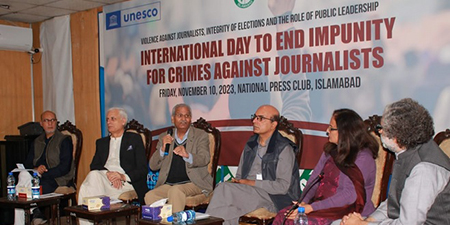
The seminar highlighted the threats journalists encounter during elections and the vital role of public leadership in safeguarding their safety. Experts discussed the impact of these threats on credibility and democracy.Summary
ISLAMABAD—The Institute for Research, Advocacy and Development (IRADA), in collaboration with UNESCO and the National Press Club, hosted a seminar on Friday at the National Press Club commemorating the International Day to End Impunity for Crimes Against Journalists (IDEI). It was titled “Violence Against Journalists, the Integrity of Elections, and the Role of Public Leadership.”
As part of the UNESCO global theme on Impunity Day, the seminar drew attention to various attacks on journalists that could occur or intensify during elections. According to UNESCO, 2024 will be a super-election year in which there will be 81 elections worldwide with an estimated 2.6 billion people participating.
The occasion reinforces the coordinated response among mechanisms to the various threats to the right to freedom of expression. Journalists face diverse threats, such as legal, digital, and psychological risks, leading to self-censorship and compromising their ability to provide impartial and objective information. This trend diminishes the credibility of journalists globally, underscoring the importance of reporters prioritizing credibility to restore public trust in their profession.
The seminar brought together diverse stakeholders to discuss the challenges journalists face during elections, underscore the importance of public leadership in ensuring a safe media environment, and raise awareness about impunity.
Muhammad Aftab Alam, Executive Director of IRADA welcomed the participants and stated “the issue of safety of journalists during the election is vital. It is also relevant to the integrity of the elections, so therefore all the public leaders and political parties must understand the importance of a safe environment for joining in the country to ensure the integrity of elections.”
The panel discussion, moderated by Muhammad Badar Alam, delved into the pressing issues of violence against journalists during electoral processes and the role of public leadership. Notable panelists, including Iqbal Khattak, Myra Imran, Fauzia Shahid, Mukhtar Ahmed Ali, Syed Abdul Ahad, and veteran journalist Nasir Zaidi provided valuable insights.
Badar Alam, senior journalist said: “Threats to journalists safety hamper the free flow of information which brings down the credibility of journalism affects the credibility of elections in particular and democracy in general.”
Afzal Butt, President Pakistan Federal Union of Journalists (PFUJ), expressed concerns over the blatant violation of fundamental rights of journalists. He reiterated the urgency of addressing threats against journalists during the election cycle. He also called on journalists to practice ethical journalism by focusing on real issues during the election period.
The seminar concluded with a speech by the chief guest, Murtaza Solangi, Federal Minister for Information and Broadcasting and Parliamentary Affairs. Minister Solangi stated: “It is the responsibility of the government and institutions to apprehend the perpetrators of killings of journalists,” quoting journalist Jan Muhammad’s murder. He reiterated the government's commitment to ensuring the safety of journalists and free and fair elections.
Anwar Raza, President of the National Press Club, thanked the minister for gracing the occasion and the panelists for engaging the audience in a fruitful discussion.
KEY POINTS:
- Seminar marks International Day to End Impunity for Crimes Against Journalists.
- Focus on violence against journalists during election cycles.
- Experts underscore the importance of a safe environment for journalism.
- Panelists included notable journalists and executives from media organizations.
- Government commitment to ensuring safety and free elections reemphasized.