
Why news avoidance may be a bigger threat than misinformation Seven evidence-based media predictions for Pakistan and beyond in 2026 Dawn calls life sentences for journalists an extreme move Arab journalists pledge cooperation to defend media freedom Palestinian rights group flags press access limits Silencing an article in Pakistan makes it louder When telling the story becomes a crime: A warning shot for Pakistani journalism Breaking news alerts then and now: from urgency to overload AI reduces publisher traffic but not newsroom jobs, study finds Palestinian journalists face a wave of detentions in 2025 Why news avoidance may be a bigger threat than misinformation Seven evidence-based media predictions for Pakistan and beyond in 2026 Dawn calls life sentences for journalists an extreme move Arab journalists pledge cooperation to defend media freedom Palestinian rights group flags press access limits Silencing an article in Pakistan makes it louder When telling the story becomes a crime: A warning shot for Pakistani journalism Breaking news alerts then and now: from urgency to overload AI reduces publisher traffic but not newsroom jobs, study finds Palestinian journalists face a wave of detentions in 2025
Logo
Janu
Women in Media

Dawn investigation reveals banned outfits in Pakistan operate freely on Facebook

 JournalismPakistan.com |  Published: 30 May 2017

Join our WhatsApp channel
Dawn investigation reveals banned outfits in Pakistan operate freely on Facebook
Dawn's investigation shows that many banned outfits in Pakistan maintain active presences on Facebook. The groups include sectarian and separatist organizations, communicating primarily in local languages.

ISLAMABAD - Forty-one out of Pakistan's 64 banned outfits are present on Facebook in the form of groups and individual user profiles and operate openly on Facebook.

According to an investigation carried out by Dawn last month, the outfits' network, both interconnected and public, is a mix of Sunni and Shia sectarian groups, global terror organizations operating in Pakistan, and separatists in Balochistan and Sindh provinces.

The names of all banned outfits, including acronyms and small variations in spelling, were searched on Facebook to find pages, groups, and user profiles that publicly "liked" a banned outfit.

The biggest outfits on Facebook, in order of size, are Ahle Sunnat Wal Jamaat (ASWJ) with 200 pages and groups, Jeay Sindh Muttahida Mahaz (JSMM) with 160, Sipah-i-Sahaba (SSP) 148, Balochistan Students Organization Azad (BSO-A) 54 and Sipah-e-Muhammad with 45.

Other banned outfits which exist on Facebook at a smaller scale include Lashkar-e-Jhangvi (LeJ), Tehreek-e-Taliban Pakistan (TTP), Tehreek-e-Taliban Swat, Tehrik-e-Nifaz-e-Shariat-e-Mohammadi, Jamat-ul-Ahrar, 313 Brigade, multiple Shia outfits and a host of Baloch separatist organizations.

"An examination of some user profiles linked to these banned outfits indicates open support of sectarian and extremist ideology", Dawn said in its report.

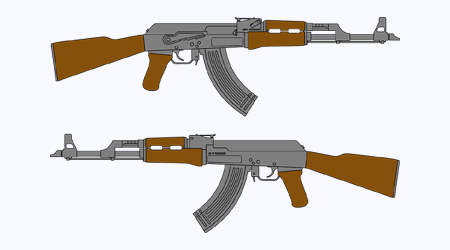
A few of these profiles have also publicly "liked" pages and groups related to weapons use and training.

While some of the Facebook pages and groups claim to be "official" representatives of the outfits, others appear to be managed by members and supporters in ideological agreement.

"In general, the Facebook updates were in Urdu or Roman Urdu rather than English, suggesting the content was primarily for local consumption. A very small number were in Sindhi or Balochi, also indicating a niche target audience," the report added. - Agencies

KEY POINTS:

  • 41 out of 64 banned outfits active on Facebook.
  • Largest groups include ASWJ, JSMM, and SSP.
  • Profiles linked to banned outfits show support for extremist ideologies.
  • Content primarily in Urdu, targeting local audiences.
  • Some profiles 'like' pages related to weapons and training.
Read Next

Newsroom
Arab journalists pledge cooperation to defend media freedom

Arab journalists pledge cooperation to defend media freedom

 January 04, 2026 Arab journalist unions from Jordan and Egypt announce deeper cooperation on training and advocacy, stressing media freedom and the role of Arab media in shaping global narratives.


Palestinian rights group flags press access limits

Palestinian rights group flags press access limits

 January 03, 2026 The Palestinian Centre for Human Rights highlights ongoing restrictions on journalists in occupied territories, impacting press freedom and humanitarian reporting.


Breaking news alerts then and now: from urgency to overload

Breaking news alerts then and now: from urgency to overload

 January 03, 2026 The evolution of breaking news alerts highlights a shift from rare, trusted updates to frequent notifications that contribute to audience fatigue.


AI reduces publisher traffic but not newsroom jobs, study finds

AI reduces publisher traffic but not newsroom jobs, study finds

 January 02, 2026 A study reveals that AI has reduced traffic to news publishers but not job levels, challenging fears of mass layoffs in journalism.


Palestinian journalists face a wave of detentions in 2025

Palestinian journalists face a wave of detentions in 2025

 January 02, 2026 In 2025, over 42 Palestinian journalists were detained by Israeli authorities, highlighting pressing concerns for press freedom and journalist safety.


Popular Stories