
Amended PEMRA bill contradicts labor rights and dangerously defines disinformation: IFJ
JournalismPakistan.com | Published: 24 July 2023
Join our WhatsApp channel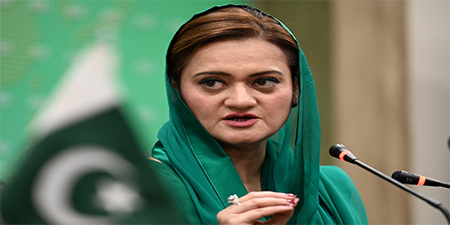
The amended PEMRA bill passed by Pakistan's National Assembly raises concerns about labor rights and disinformation definitions. Critics argue it violates existing labor laws and increases the risk of censorship.Summary
Despite serious concerns from the sector, a media amendment bill that significantly expands Pakistan's existing media regulatory legislation was unanimously passed by the country's National Assembly on July 21. The International Federation of Journalists (IFJ) and its affiliate, the Pakistan Federal Union of Journalists (PFUJ), said the bill violated current labor laws for media workers and included definitions of disinformation and misinformation that are both concerning and dangerous.
Pakistan's Minister for Information and Broadcasting, Marriyum Aurangzeb, introduced the regulation bill in the national parliament, recommending adjustments to the Pakistan Electronic Media Regulatory Authority (PEMRA), initially introduced in 2002. The amendments modify nine existing provisions and add five new sections of the law. They incorporate new definitions for misinformation and disinformation and specify payment of media worker salaries by media companies within two months.
On July 22, Aurangzeb said that the PEMRA amendments were made to protect the rights of journalists, including digital media journalists, and represent journalist organizations. She also said the proposal was developed in consultation with several media stakeholders. But labor and human rights bodies, as well as IFJ's sole affiliate in Pakistan, PFUJ, flagged critical concerns with the legislation and criticized the non-inclusive nature of the industry consultations, which appeared to be determined along political lines. Key concerns were flagged over several provisions which potentially violate Pakistan's constitution.
The Human Rights Commission of Pakistan (HRCP) said the definition of 'disinformation' in the bill "strays into censorship territory and may allow powerful groups or individuals to stonewall journalists seeking both sides of a story." So too, while the bill introduces measures to protect and guarantee the payment of salaries for electronic media workers, the bill's proposed section 20A effectively gives statutory permission to media owners to delay the payment of wages. The bill stipulates payment of media workers within 60 days, double the period outlined in Pakistan's existing labor laws of 30 days.
The regulator will undergo structural and operational changes as part of the amendment, with the authority expanding to 13 members and the chairperson. Broadcasters and media workers' longstanding request was only partially fulfilled by including non-voting honorary members in the authority, including representatives from each Pakistani broadcaster but only one from the country's journalist federation, PFUJ, which has numerous factions.
PFUJ President GM Jamali and Secretary General Rana Mohammad Azeem said, "There are many points in the bill that could be used against journalists and will harm the freedom of expression enshrined in the country's constitution. PFUJ demands a complete service structure for the employees of the electronic media, not just ensuring timely payment of salaries."
The IFJ said: "While the IFJ acknowledges the aim of the PEMRA amendments, it is highly concerning that several provisions violate Pakistan's labour laws and have the potential for increased government censorship. Pakistan's minister for information and broadcasting has the utmost responsibility to ensure transparency and full consultation with all key media stakeholders. That has clearly not been the case. Legislation that doubles the time in which media workers should be paid does not protect their right to a timely and decent wage."
Photo credit: Aamir Qureshi / AFP
KEY POINTS:
- PEMRA bill passed unanimously on July 21, 2023.
- Critics claim the bill violates labor rights for media workers.
- New definitions for misinformation and disinformation are contentious.
- Payment timeline for media workers doubled from 30 to 60 days.
- Calls for more inclusive consultations with media stakeholders.