
Amar Guriro: Journalism's future is human-AI partnership The JournalismPakistan Global Media Brief | Edition 23 | June 5, 2026 As AI reshapes news, publishers seek a sustainable future Every frame at a cost: The safety crisis facing Pakistan's camerapersons Why journalists are increasingly targeted in conflict zones What the 60 Minutes controversy means for TV journalism Zee secures FIFA World Cup rights in India through 2030 How fact-checkers verify viral videos during breaking news Pentagon restrictions on reporters draw media backlash Israel-Lebanon talks proceed as conflict hinders reporting Why governments are tightening controls on foreign journalists China condemns US restrictions on Xinhua reporter Taiwan condemns China over New York Times reporter expulsion The biggest threats facing journalism in Asia today Press freedom review: The many faces of pressure on the press Amar Guriro: Journalism's future is human-AI partnership The JournalismPakistan Global Media Brief | Edition 23 | June 5, 2026 As AI reshapes news, publishers seek a sustainable future Every frame at a cost: The safety crisis facing Pakistan's camerapersons Why journalists are increasingly targeted in conflict zones What the 60 Minutes controversy means for TV journalism Zee secures FIFA World Cup rights in India through 2030 How fact-checkers verify viral videos during breaking news Pentagon restrictions on reporters draw media backlash Israel-Lebanon talks proceed as conflict hinders reporting Why governments are tightening controls on foreign journalists China condemns US restrictions on Xinhua reporter Taiwan condemns China over New York Times reporter expulsion The biggest threats facing journalism in Asia today Press freedom review: The many faces of pressure on the press
Logo
Janu
Middle East

U.N. experts, Britain demand release of Reuters reporters in Myanmar

 JournalismPakistan.com |  Published: 13 April 2018

Join our WhatsApp channel
U.N. experts, Britain demand release of Reuters reporters in Myanmar
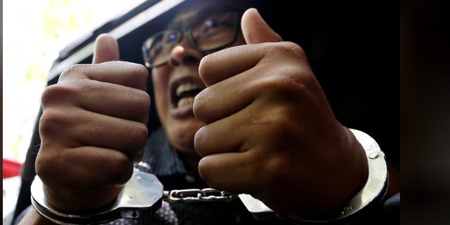
Britain and U.N. officials are calling for the release of two Reuters journalists detained in Myanmar. A judge rejected a request to dismiss their case, raising concerns over media freedom and the legal proceedings against them.

LONDON/GENEVA - Britain’s foreign minister and United Nations human rights rapporteurs separately called on Thursday for the release of two Reuters reporters detained in Myanmar, after a judge rejected a request for their case to be dismissed.

Foreign Secretary Boris Johnson said on Twitter that Myanmar must show its “commitment to media freedom” while the U.N. special rapporteurs said in a joint statement that the pursuit of the case against Wa Lone, 32, and Kyaw Soe Oo, 28, gave rise to “grave concern for investigative journalism.”

A Myanmar government spokesman could not immediately be reached for comment.

A court in Yangon has been holding preliminary hearings since January to decide whether the journalists will be charged for possessing secret government papers under the colonial-era Official Secrets Act, which carries a maximum penalty of 14 years in prison.

Judge Ye Lwin rejected on Wednesday a defense request to dismiss the case against the two reporters, who have been held since December, for lack of evidence. The judge said he wanted to hear the eight remaining prosecution witnesses out of the 25 listed, according to defense lawyer Khin Maung Zaw.

Yanghee Lee, U.N. special rapporteur on Myanmar, and David Kaye, U.N. special rapporteur on the right to freedom of opinion and expression, noted the journalists could be sentenced to longer terms if found guilty.

“The perpetrators of a massacre that was, in part, the subject of Wa Lone and Kyaw Soe Oo’s reporting have been sentenced to 10 years imprisonment. And yet these two reporters face a possible 14 years imprisonment. The absurdity of this trial and the wrongfulness of their detention and prosecution are clear,” they said in a joint statement.

Special rapporteurs are independent experts appointed by the U.N.

The country’s ambassador to the U.N., Hau Do Suan, said last month that the journalists were not arrested for reporting a story, but were accused of “illegally possessing confidential government documents.” - Reuters

Key Points

  • Britain's foreign minister demands media freedom in Myanmar.
  • U.N. rapporteurs express grave concerns for imprisoned journalists.
  • The case against reporters Wa Lone and Kyaw Soe Oo continues with preliminary hearings.
  • The journalists face a maximum penalty of 14 years in prison under colonial-era laws.
  • Their reporting was connected to a massacre, contrasting their potential punishment with that of actual perpetrators.

Ask AI: Understand this story your way

AI Enabled

Dig deeper, ask anything — get instant context, background, and clarity.

Not sure what to choose? Try one of these.

The AI generates results based on your selected options
Your AI-generated results will appear here after you click the button.

Disclaimer: This feature is powered by AI and is intended to help readers explore and understand news stories more easily. While we strive for accuracy, AI-generated responses may occasionally be incomplete or reflect limitations in the underlying model. This feature does not represent the editorial views of JournalismPakistan. For our full, verified reporting, please refer to the original article.
Don't Miss These

Newsroom
Amar Guriro: Journalism's future is human-AI partnership

Amar Guriro: Journalism's future is human-AI partnership

 June 05, 2026 Amar Guriro, founder of Pakistan's first AI-powered news platform, says journalism's future rests on human-AI collaboration to improve reporting while preserving editorial oversight.


The JournalismPakistan Global Media Brief | Edition 23 | June 5, 2026

The JournalismPakistan Global Media Brief | Edition 23 | June 5, 2026

 June 05, 2026 Global Media Brief reviews pressures reshaping journalism, press freedom, AI and platform power, and reports BBC's Emmy, 60 Minutes turmoil and Taiwan's protest.


As AI reshapes news, publishers seek a sustainable future

As AI reshapes news, publishers seek a sustainable future

 June 05, 2026 At the World News Media Congress in Marseille, publishers discussed how generative AI is altering newsroom workflows, audience engagement and content licensing.


Why journalists are increasingly targeted in conflict zones

Why journalists are increasingly targeted in conflict zones

 June 04, 2026 Journalists in conflict zones face rising danger as combatants, states and militias increasingly target independent reporting to control narratives.


What the 60 Minutes controversy means for TV journalism

What the 60 Minutes controversy means for TV journalism

 June 03, 2026 The 60 Minutes controversy at CBS exposes tensions over leadership, editorial independence and pressures on legacy TV journalism amid political polarization.


Popular Stories