
Two Ugandan journalists arrested and charged with publishing without license
JournalismPakistan.com | Published: 28 June 2024
Join our WhatsApp channel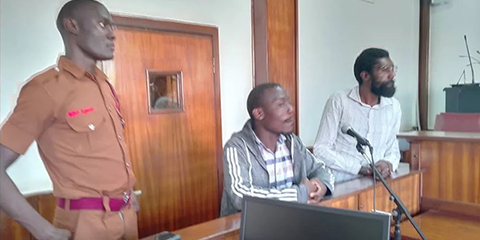
Dickson Mubiru and Alirabaki Sengooba were charged in Uganda for publishing without a broadcasting license. Their arrest has drawn international condemnation and calls for reform of oppressive media laws.Summary
NAIROBI—The Committee to Protect Journalists (CPJ) has called on Ugandan authorities to release journalists Dickson Mubiru and Alirabaki Sengooba, drop all criminal charges against them, and reform laws that suppress journalistic freedom.
On June 20, the Buganda Road Chief Magistrates Court in Kampala charged Mubiru, managing editor of the privately owned news website theGrapeVine, and Sengooba, a reporter for the outlet, with publishing information without a broadcasting license. This is according to their lawyer, Nasser Kibazo, and a copy of the charge sheet reviewed by CPJ.
The charges stem from a May 15 report that alleged a "clash" between a High Court judge and a lawyer over a case handling. The journalists, who pleaded not guilty, are expected back in court on July 9 and were remanded to Luzira Prison in Kampala.
On June 21, the journalists faced additional charges for a June 13 report by Sengooba about state corruption involving parliamentarians. This charge has been transferred to another chamber of the same court, with a plea hearing scheduled for July 4.
Under Section 27 of Uganda's 2013 communications law, broadcasting without a license can lead to imprisonment of up to one year and/or a fine of 500,000 shillings (US$135). Kibazo noted the charges are unusual since the articles were published on a website, not broadcast on television or radio.
"The spurious charges against Ugandan journalists Dickson Mubiru and Alirabaki Sengooba are designed to ensure they spend time behind bars in retaliation for their critical reporting," said CPJ Africa Program Coordinator Muthoki Mumo. "Authorities should release these journalists unconditionally and revise legislation that can be used to silence the media."
Kibazo asserted the case is more about suppressing freedom of expression and the journalists' right to practice their profession than about the licensing issue. He suggested the state is primarily interested in uncovering the journalists' sources.
The journalists were arrested on June 18 after responding to a June 17 summons at the Central Police Station in Kampala, where police questioned them about their sources for the May 15 and June 13 reports.
The Human Rights Network for Journalists-Uganda (HRNJ-U) condemned the arrests and charges in a June 20 statement.
In a May 18 statement, the judiciary dismissed the report of a clash between a High Court judge and a lawyer as false and advised it be treated with contempt.
Judiciary spokesperson James Ereemye declined to comment on CPJ's inquiries. Parliamentary spokesperson Chris Obore noted that parliament could not be a complainant in a criminal case but referred CPJ to prosecutors for further comments. Jacquelyn Okui, spokesperson for the public prosecutor's office, stated the charges were based on evidence, with the court to determine if the case proceeds. Kampala Metropolitan Police spokesperson Patrick Onyango did not respond to CPJ's calls and messages.
In January 2016, Ugandan authorities arrested and detained Mubiru and another editor for 24 hours for refusing to reveal a source before releasing them without charge.
Photo caption: Dickson Mubiru (right), managing editor of theGrapeVine, and Alirabaki Sengooba (center), a reporter for the outlet, appear in court on June 20, 2024. (Photo: Trusted News Uganda)
Key Points
- Journalists were arrested on June 18 after responding to a police summons.
- They face charges for reports alleged to have involved a court clash and corruption.
- The Committee to Protect Journalists demands their unconditional release.
- Current laws allow imprisonment for broadcasting without a license.
- The case highlights ongoing issues of press freedom and expression in Uganda.
Relevant Topics
Ask AI: Understand this story your way
AI EnabledDig deeper, ask anything — get instant context, background, and clarity.
Disclaimer: This feature is powered by AI and is intended to help readers explore and understand news stories more easily. While we strive for accuracy, AI-generated responses may occasionally be incomplete or reflect limitations in the underlying model. This feature does not represent the editorial views of JournalismPakistan. For our full, verified reporting, please refer to the original article.