
Strong unions key to winning decent working conditions: IFJ
JournalismPakistan.com | Published: 6 October 2017
Join our WhatsApp channel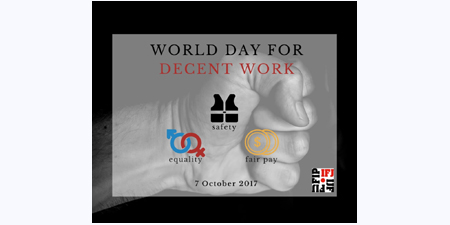
The IFJ has highlighted the importance of strong unions in promoting decent working conditions for journalists. A recent survey underscores the challenges faced, including low pay and attacks on collective bargaining rights.Summary
BRUSSELS - Despite unprecedented challenges facing the media industry, journalists unions have succeeded in winning higher pay, saving jobs and securing new collective agreements over the past twelve months.
The results of a major new survey of journalists’ social and professional rights to mark World Day for Decent Work on October 7 also show overwhelmingly that strong unions backed by robust and properly enforced labor legislation and rights to collective bargaining are crucial to helping journalists secure fair and decent working conditions.
The survey of 60 IFJ affiliates from every continent – released to coincide with World Day for Decent Work – also shows that attacks on collective bargaining, low pay and a lack of rights for freelancers are threatening to further undermine working conditions for journalists across the globe.
A significant majority of unions surveyed highlighted a lack of collective bargaining, a lack of social rights, low pay, the widespread denial of rights to freelancers and an increasing concentration of media ownership as the main challenges to achieving decent working conditions.
The economic crisis facing many countries was also a factor in companies and governments undermining labor and social rights.
But overwhelmingly respondents highlighted the benefits of union membership and action in tackling the challenges brought about by significant economic and technological changes happening throughout the media industry worldwide.
The IFJ has called for a global commitment to respect rights to freedom of association, collective bargaining and fair working conditions as a crucial step towards ensuring journalists can work independently and uphold the highest values of journalism and press freedom.
IFJ President Philippe Leruth said: “Once again there is a clear demonstration that without strong unions and rights to collective bargaining journalists face an increasingly precarious future – forced to work in conditions of poverty, corruption or fear.
“Decent working conditions supported by strong unions guarantee quality and independence of information.
“For those who believe in justice, believe in fair working conditions, believe in press freedom, the clear fact is you are better off in the union. I urge all journalists to join their local union, to join our fight for the social, labor and professional rights of all journalists”. – IFJ media release
Key Points
- Strong unions are essential for fair working conditions in journalism.
- A survey of 60 IFJ affiliates reveals major challenges, including low pay and lack of bargaining rights.
- Economic crises are exacerbating the struggles faced by journalists worldwide.
- The IFJ calls for global commitment to freedom of association and labor rights.
- Union membership is crucial for journalists to combat precarious working conditions.
Relevant Topics
Ask AI: Understand this story your way
AI EnabledDig deeper, ask anything — get instant context, background, and clarity.
Disclaimer: This feature is powered by AI and is intended to help readers explore and understand news stories more easily. While we strive for accuracy, AI-generated responses may occasionally be incomplete or reflect limitations in the underlying model. This feature does not represent the editorial views of JournalismPakistan. For our full, verified reporting, please refer to the original article.