
Lawsuit against The Atlantic fuels press freedom concerns Meera walkout puts focus on Irshad Bhatti's interview ethics One article, no newsroom: Viral piece sparks debate on Pakistan media From regulation to resignations: Pakistan's media fault lines Asia press freedom: A week of pressure and progress Five reasons slow news days strengthen journalism Press freedom review: Detentions, digital control, and industry upheaval Chilling effect in media: The unseen pressure behind newsroom decisions South Asia sees 250 media rights violations in a year Media coverage of violence against women falls sharply globally Attack on Assamese newspaper deepens press safety concerns London arrests over Iran International attack The JournalismPakistan Global Media Brief | Edition 16 | April 17, 2026 Jahanzaib Haque takes helm as Nukta chief editor Khaleej Times at 48: A legacy newspaper navigating the digital age Lawsuit against The Atlantic fuels press freedom concerns Meera walkout puts focus on Irshad Bhatti's interview ethics One article, no newsroom: Viral piece sparks debate on Pakistan media From regulation to resignations: Pakistan's media fault lines Asia press freedom: A week of pressure and progress Five reasons slow news days strengthen journalism Press freedom review: Detentions, digital control, and industry upheaval Chilling effect in media: The unseen pressure behind newsroom decisions South Asia sees 250 media rights violations in a year Media coverage of violence against women falls sharply globally Attack on Assamese newspaper deepens press safety concerns London arrests over Iran International attack The JournalismPakistan Global Media Brief | Edition 16 | April 17, 2026 Jahanzaib Haque takes helm as Nukta chief editor Khaleej Times at 48: A legacy newspaper navigating the digital age
Logo
Janu
World

Senior Saudi prince says CIA cannot be trusted on Khashoggi conclusion

 JournalismPakistan.com |  Published: 24 November 2018

Join our WhatsApp channel
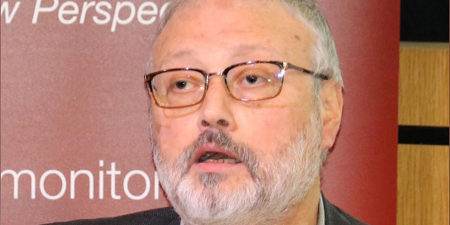
Senior Saudi prince says CIA cannot be trusted on Khashoggi conclusion
A senior Saudi prince has expressed skepticism about the CIA's findings on the murder of journalist Jamal Khashoggi. He highlighted historical inaccuracies related to intelligence assessments.

ABU DHABI - A senior Saudi prince cast doubt upon the reported CIA finding that Saudi Crown Prince Mohammed bin Salman ordered the killing of journalist Jamal Khashoggi in Istanbul last month, saying the agency could not be counted on to reach a credible conclusion.

“The CIA is not necessarily the highest standard of veracity or accuracy in assessing situations. The examples of that are multitude,” Prince Turki al-Faisal, a senior member of the royal family, told journalists in Abu Dhabi on Saturday.

The prince, a former Saudi intelligence chief who has also served as ambassador to the United States, said the agency’s conclusion that Iraq possessed chemical weapons before the U.S. invasion in 2003 showed it could be unreliable.

“That was the most glaring of inaccurate and wrong assessments, which led to a full-scale war with thousands being killed,” he said, speaking at an event hosted by the New York-based Beirut Institute.

“I don’t see why the CIA is not on trial in the United States. This is my answer to their assessment of who is guilty and who is not and who did what in the consulate in Istanbul.”

The CIA has concluded that Prince Mohammed ordered the operation to kill Khashoggi, as first reported by the Washington Post, and briefed other parts of the U.S. government on its findings, sources told Reuters last week.

U.S. President Donald Trump has disputed that the agency reached a conclusion on the murder, saying instead “they have feelings certain ways.”

A Turkish newspaper also reported on Thursday that CIA Director Gina Haspel signaled to Turkish officials that the agency had a recording of a call in which the crown prince gave instructions to “silence” the journalist.

Khashoggi was killed at the Saudi consulate in Istanbul on Oct. 2 in an operation that Turkish authorities have said was ordered by the highest level of Saudi leadership, prompting the kingdom’s biggest political crisis in a generation.

After offering numerous contradictory explanations, Riyadh said Khashoggi was killed and his body dismembered after negotiations to persuade him to return to Saudi Arabia failed.

The kingdom’s public prosecutor is seeking the death penalty for five suspects charged in the murder but has said Prince Mohammed had no prior knowledge of the operation. - Reuters

Key Points

  • Prince Turki al-Faisal doubts CIA's reliability on Khashoggi case.
  • CIA concluded Crown Prince ordered Khashoggi's killing.
  • CIA's past mistakes, like Iraq WMDs, raise concerns.
  • Khashoggi was killed at the Saudi consulate in Istanbul.
  • Five suspects face death penalty, but Crown Prince denies prior knowledge.

Ask AI: Understand this story your way

AI Enabled

Dig deeper, ask anything — get instant context, background, and clarity.

Not sure what to choose? Try one of these.

The AI generates results based on your selected options
Your AI-generated results will appear here after you click the button.

Disclaimer: This feature is powered by AI and is intended to help readers explore and understand news stories more easily. While we strive for accuracy, AI-generated responses may occasionally be incomplete or reflect limitations in the underlying model. This feature does not represent the editorial views of JournalismPakistan. For our full, verified reporting, please refer to the original article.

Dive Deeper

Newsroom
Lawsuit against The Atlantic fuels press freedom concerns

Lawsuit against The Atlantic fuels press freedom concerns

 April 21, 2026 Kash Patel's defamation suit against The Atlantic has intensified scrutiny of legal pressures on journalists and raised concerns about press freedom.


Meera walkout puts focus on Irshad Bhatti's interview ethics

Meera walkout puts focus on Irshad Bhatti's interview ethics

 April 20, 2026 Irshad Bhatti's podcast interview with actor Meera drew criticism after he pressed personal topics and Meera walked out, sparking debate over media accountability.


One article, no newsroom: Viral piece sparks debate on Pakistan media

One article, no newsroom: Viral piece sparks debate on Pakistan media

 April 20, 2026 Dan Qayyum's viral article drew one million views in days, igniting debate about independent creators' reach and what it means for Pakistan's newsrooms.


Asia press freedom: A week of pressure and progress

Asia press freedom: A week of pressure and progress

 April 19, 2026 Across Asia, journalists faced growing legal pressure, expanded surveillance and attacks on media outlets, even as a key appointment boosted gender diversity.


Five reasons slow news days strengthen journalism

Five reasons slow news days strengthen journalism

 April 19, 2026 Slow news days give journalists time to verify facts, pursue in-depth reporting, and reduce errors, strengthening overall newsroom accuracy and long-form storytelling.


Popular Stories