
Police sought Secrets Act probe of Reuters reporters an hour after their arrest
JournalismPakistan.com | Published: 24 January 2018
Join our WhatsApp channel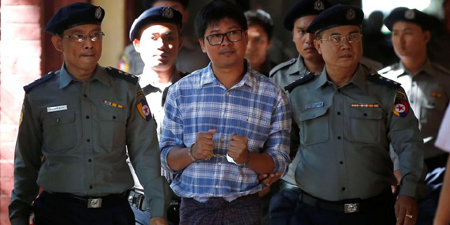
Two Reuters journalists were arrested in Myanmar and faced charges under the Official Secrets Act. Their defense claims the rapid escalation of the case is unusual.Summary
YANGON -Myanmar police sought permission from the nation’s president to go ahead with an investigation into whether two Reuters journalists had breached the Official Secrets Act only an hour after arresting them last month, a court heard on Tuesday.
Reporters Wa Lone, 31, and Kyaw Soe Oo, 27, had worked on Reuters coverage of a crisis in Rakhine state, where 688,000 Rohingya Muslims have fled an army crackdown on insurgents since late August, according to estimates by the United Nations.
They were detained on Dec 12 after they had been invited to meet police officers over dinner in Yangon. The reporters have told relatives they were arrested almost immediately after being handed some documents at a restaurant by two policemen they had not met before.
The prosecution’s first witness in the case, Police Lieutenant Colonel Yu Naing of Yangon’s northern district, told the court in Yangon that authorization was sought that evening from President Htin Kyaw’s office to proceed with a case under the little-used colonial-era Official Secrets Act.
“The accused were arrested around 9 o’clock on the 12th, and … the letter to ask permission from the president’s office was ready at 10 o’clock,” said defense lawyer Than Zaw Aung, referring to the court testimony of Lieutenant Colonel Yu Naing.
The authorization from the president’s office came through the next day, Dec 13.
Another defense lawyer, Khin Maung Zaw, said such speed was unusual, and that typically such authorizations would be sought about a week into a probe and would be issued by a lower-ranked minister rather than the president.
Reuters contacted Zaw Htay, spokesman for national leader Aung San Suu Kyi, to ask why the case had been escalated within an hour to the president’s office. He said in a text message that he could not immediately comment.
Wa Lone and Kyaw Soe Oo last appeared in court on Jan 10, when prosecutors sought charges against them under the Official Secrets Act, which dates back to 1923 – when Myanmar, then known as Burma, was under British rule – and carries a maximum prison sentence of 14 years.
They have been accused under Section 3.1 (c) of the act, which covers entering prohibited places, and taking images or obtaining secret official documents that “might be or is intended to be, directly or indirectly, useful to an enemy”.
The prosecution witness, Lieutenant Colonel Yu Naing, said the reporters were arrested while they were walking along a road carrying four official documents that included a listing of forces and weapons of a police battalion in the Maungdaw district of Rakhine state.
They were also found to have a report on an attack by Rohingya insurgents on a police outpost and a sketch of a map showing the post, as well as a copy of a report on the status of Rohingya villages following the military crackdown, according to a document Yu Naing read out in court.
The Ministry of Information has previously cited police as saying the two journalists were “arrested for possessing important and secret government documents related to Rakhine State and security forces”. It has said they “illegally acquired an information with the intention to share it with foreign media”.
Yu Naing repeatedly told the court “I don’t know”, when asked about the circumstances of the arrest because it was only reported to him by subordinates. He could not point to evidence that the defendants were acting for the enemy or hostile forces, defense lawyer Khin Maung Zaw told reporters after the hearing.
He has previously said that the prosecution has 24 other witnesses in the case, more than half of whom are police.
A ruling on an application for bail will be announced at the court’s next hearing, on Feb 1, Khin Maung Zaw said.
The prosecution has objected to the request for bail.
In a statement, Reuters said: “We await the court’s ruling on bail. Time is of the essence and we continue to call for Wa Lone and Kyaw Soe Oo’s prompt release. They are innocent of any wrongdoing and should be allowed to return to their jobs reporting on events in Myanmar.”
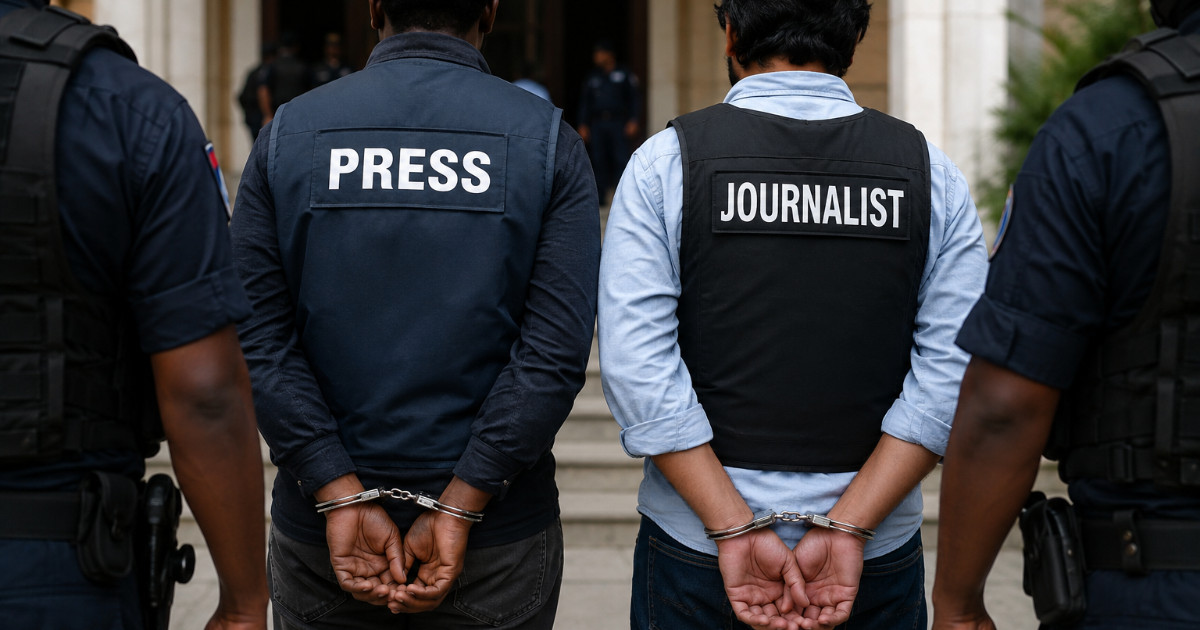
The two journalists were handcuffed as they were led into the court.
Wa Lone smiled and gave a thumbs-up sign to the crowd there, which included relatives, reporters and diplomats from at least six countries and the United Nations and the European Union.
During a break, the reporters received fruit from family members and spoke with them. Kyaw Soe Oo briefly hugged his two-year-old daughter.
Government officials from some of the world’s major nations, including the United States, Britain, and Canada, as well as top UN officials, have called for the reporters to be freed.
“We are disappointed that, at a minimum, they have still not been granted bail,” the US embassy in Yangon said on its Facebook page. “Their arrests were highly irregular and have hurt press freedom in Myanmar. We call again for their release so they could be with their families and return to their jobs.”
Former New Mexico governor Bill Richardson said last week that he would work towards securing the release of the two journalists in his capacity as a member of an international advisory board on the crisis in Rakhine state.
He was hoping to raise the case with Minister of Home Affairs Lieutenant General Kyaw Swe during a visit to Myanmar’s capital, Naypyitaw, this week. Asked about his efforts, he told Reuters in Naypyitaw on Tuesday: “I am working on it.” - Reuters
Key Points
- Myanmar police sought presidential approval for an investigation within an hour of the journalists' arrest.
- Wa Lone and Kyaw Soe Oo were detained for allegedly breaching the Official Secrets Act.
- International calls for their release have increased amid concerns over press freedom.
- The journalists were arrested while in possession of official documents related to Rakhine state.
- A court ruling on bail is scheduled for February 1.
Relevant Topics
Ask AI: Understand this story your way
AI EnabledDig deeper, ask anything — get instant context, background, and clarity.
Disclaimer: This feature is powered by AI and is intended to help readers explore and understand news stories more easily. While we strive for accuracy, AI-generated responses may occasionally be incomplete or reflect limitations in the underlying model. This feature does not represent the editorial views of JournalismPakistan. For our full, verified reporting, please refer to the original article.