
Palestine becomes first country to adopt Media Safety Curriculum for journalists
JournalismPakistan.com | Published: 20 October 2016
Join our WhatsApp channel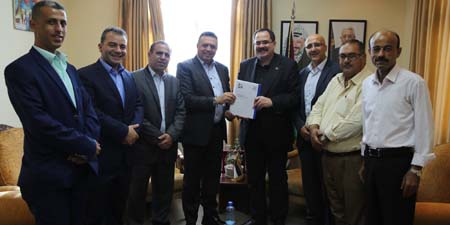
Palestine has officially adopted the Media Safety Curriculum for journalists, a first for public universities. The curriculum aims to protect journalists working under challenging conditions.Summary
BRUSSELS - Following a meeting between the Palestinian Ministry of Education and Higher Education and the Palestinian Journalists Syndicate (PJS), an IFJ affiliate, Palestine became the first country to adopt the IFJ/UNESCO Media Safety Curriculum for journalists in public universities.
During a meeting with the PJS President, Nasser Abu Baker, the Palestinian Minister of Education and Higher Education, Sabri Saidam, signed on 18 October a decision to adopt the Media Safety Curriculum.
It has been developed by the IFJ and UNESCO over the last two years to help prepare journalism students to be able to operate safely when reporting on the violence of the occupation and informing the public objectively. This is the first time safety has beei introduced officially into journalism curricula which will be implemented in 19 public and governmental universities and colleges in Palestine.
It was also agreed that the Council of Higher Education would explore its application in the other Palestinian universities. Minister Saydanm praised the role of the PJS in defending journalists and its presence on the international level and its interest in strengthening the partnership with the Ministry to develop journalism students’ skills.
“We are very proud of the PJS for securing this agreement and their tireless work to defend the rights of Palestinian journalists to work within a safe environment.
Palestinian journalists have to work under some of the most difficult conditions and have been subjected over the decades to numerous violent attacks mostly by the Israeli army, none of which has been investigated by an independent commission,” said IFJ President, Philippe Leruth.
“We also congratulate the Palestinian Ministry of Education and Higher Education for their pioneering contribution to the UN Action Plan on Safety and the Issue of Impunity by approving the safety curriculum for journalism schools. Finally, we call on all countries in the region and beyond to follow this step and the IFJ, its affiliates and partners will be there to support them in this process".
The final draft of the curriculum is the result of a two-year cooperation between the IFJ and UNESCO which involved consultations with universities and journalism schools from across the region.
It combines theoretical and practical knowledge and skills in 11 lessons: Introduction to Journalism and Threats to Media Workers, Planning for Personal Safety, Personal Health Care and Trauma in Hostile Environments, Risk Assessment, Travel Security, Gender and Safe Reporting, Covering Demonstrations and Civil Unrest, Human Rights, Humanitarian Law and Fighting Back, Ethics and Safety and Investigative Journalism.
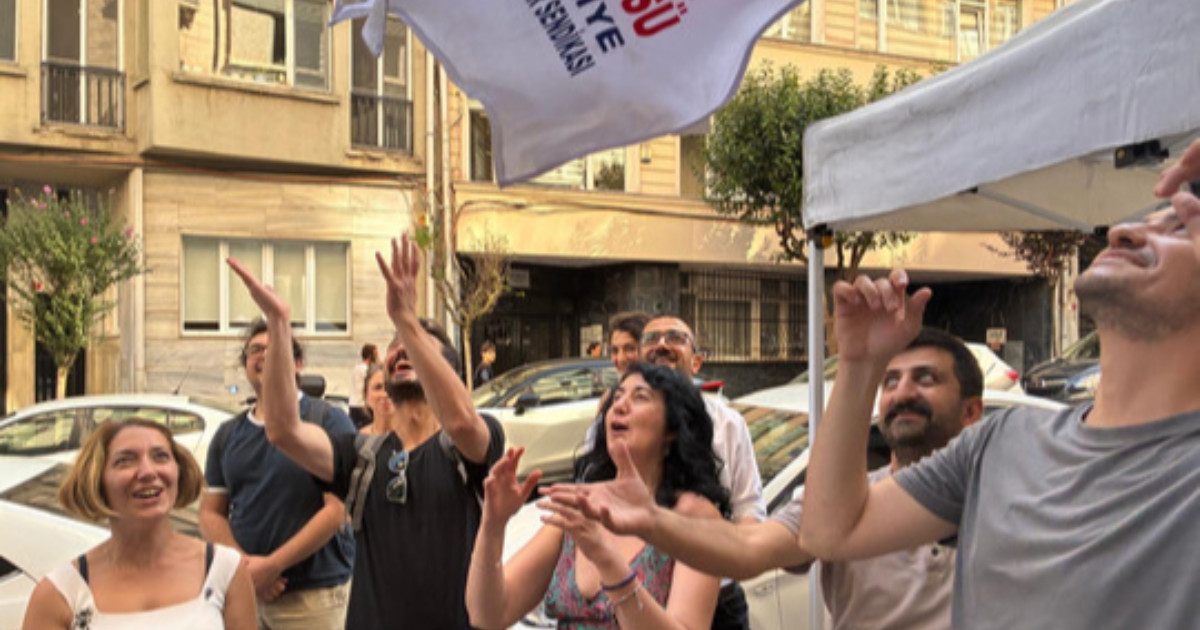
The adoption of the Media Safety Curriculum follows the seminar organized by the IFJ and UNESCO late September in Ramallah involving Palestinian universities to discuss the best ways to integrate this course into the universities’ education plans. - IFJ media release/Image: PJS
Key Points
- Palestine is the first country to adopt the Media Safety Curriculum.
- The curriculum will be implemented in 19 public and governmental universities.
- It aims to prepare journalists for safe reporting in hostile environments.
- Developed by IFJ and UNESCO after two years of collaboration.
- The initiative supports the UN Action Plan on Safety for journalists.
Relevant Topics
Ask AI: Understand this story your way
AI EnabledDig deeper, ask anything — get instant context, background, and clarity.
Disclaimer: This feature is powered by AI and is intended to help readers explore and understand news stories more easily. While we strive for accuracy, AI-generated responses may occasionally be incomplete or reflect limitations in the underlying model. This feature does not represent the editorial views of JournalismPakistan. For our full, verified reporting, please refer to the original article.