
Nothing quite like The Muslim
JournalismPakistan.com | Published: 3 May 2012 | Old Timer
Join our WhatsApp channel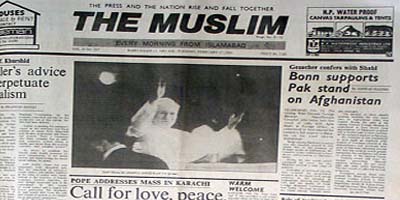
The article looks back at The Muslim (1978–1999) and argues that few later English dailies matched its influence, credibility and newsroom standards. It highlights the paper’s celebrated journalists, training culture and notable acts of defiance against censorship during the Zia era.Summary
They come and they go, but no English daily has quite had the legend-like impact of The Muslim (1978-1999).
Despite better technology and information network capability and capacity, not The News, The Frontier Post, Daily Times, The Post, The Express Tribune, Dateline Islamabad or Pakistan Today has been able to quite match the popularity, creditability or newsworthiness of The Muslim.
It was a newspaper that blazed a pioneering trail, one that others have strived to follow but have been unable to. Though, The Muslim died an undignified and unfortunate death, it is remembered with reverence and awe. It was a newspaper’s newspaper, one whose achievements and accomplishment still live on.
The amazing thing about The Muslim was that it did not rely on color printing, excessive marketing campaigns, big-name foreign link-ups or other gimmicks to sell; rather it depended on excellence, journalistic capability and integrity to forge the path it did.
For a long time The Muslim was manned by the most talented, accomplished, versatile and hard-working team of journalists and support staff before the rot set in. People like the founding Editor AT Chaudhry, HK Burki, Ahmad Hassan, Khalid Akhtar, Salim Bokhari, Ghani Jafar, Vai Ell, Merry Max, M. Ziauddin, Ayaz Amir, Anwar Iqbal, Shakil Qaiser, B.K.
Bangash et.al and then later by Zafar Iqbal Mirzaa.k.aZim, Mushahid Hussain, Dr. Maleeha Lodhi… The list reads like a who’s who of Pakistan journalism. There were others who were junior or new to the profession then but are big names today in Pakistan media. The Muslim was the perfect nursery for budding journalists. The lessons learned then were never forgotten.
The best thing was that at The Muslim one got to learn all aspects of journalism … subbing, headline writing, writing, reporting, page-making, typing and even printing. One learned how to size and edit a picture, how to layout a page, to rationalize and prioritize stories and displays. You learned to write reports, features, captions and even columns.
One learned to distinguish between genuine and forced works, between propaganda and personal agendas. One learned it all. One also learned to respect the job and seniors, to listen and to do. Indeed, one was lucky just to sit at the same desk as some of those people. The Muslim was bold in its headlines and front page displays.
It was neither afraid to take on the regime of military dictator Gen Zia-ul-Haq nor afraid to ring in innovations such as City Diary, a feature which every newspaper in Pakistan since has tried to copy. There were individuals and times at The Muslim that stand out in its history such as the time that the management kicked out over a 100 staff just to get rid of the workers’ union.
Some of the staff took to selling pakoras in Aabpara Market to highlight the injustice done to them while others raved and ranted in owner Agha Murtaza Pooya’s office, dancing on his desk while he calmly watched them from a sofa. Later, many of the sacked staffers were re-employed. The sacking turned out to be just a hiccup. Other news papers would have folded up; The Muslim moved on.
It was The Muslim staffer NasirZaidi that was taken away by the military and publically whipped as a punishment for protesting against muzzling of the media. Nasir, a quiet and rather slight fellow, is revered to this day for his courage… an icon to bravery for standing up for what he believed in.
It was also The Muslim that came up with a unique way of protesting against the censor office of the military which late in the night insisted that certain reports needed to be dropped, usually just for the heck of it. The Muslim resorted to leaving those spots blank where the story used to be. The paper appeared in the morning with numerous white spots.
It was a telling way of being noticed and heard. The Muslim was the first to introduce many Islamabad residents to the joys of the Shakarparian Hills, the Lotus Lake and Buddha Tree, the Rose and Jasmine Garden and other scenic places through its City Diaries, light write ups with a personal perspective.
It also highlighted many social issues other newspapers had not touched till then, including prostitution, leprosy and child abuse. Many of today’s leading political, social and military analysts owe their careers to this newspaper. They learned and honed their trade at The Muslim.
Then The Muslim had some fantastic cartoonists like Feica, SadCat (Sadaqat) and Afshar (Fishy Fingers) not to mention the celebrated Vai Ell who not only managed to draw former premier Z.A. Bhutto’s ire, but also that of Gen Zia and other political figures. It was a dynamic place to work in.
There was always something worthwhile to notice and appreciate, from the intelligentsia that walked through its doors to ongoing mad rush to get the pages to bed.
There was also a tremendous sense of purpose in the work being done and always there was dedication and reward. The Muslim set the bar so high that, strive as they have, none of the other newspapers since have been able to come close to its achievements and most certainly none have been able to bring about that culture of learning and excellence it did.
Truth be told, and despite all the promising starts, there’s nothing been quite like The Muslim! (Old Timer is a senior journalist who worked for The Muslim for several years)
Key Points
- The Muslim is portrayed as a landmark Pakistani English daily active from 1978 to 1999.
- The piece credits its success to journalistic excellence rather than marketing or printing gimmicks.
- It recalls a newsroom that trained staff across reporting, editing, page-making and production.
- It cites bold editorial choices, including criticism of Gen Zia-ul-Haq and innovations like City Diary.
- It recounts incidents of staff sackings, union tensions, and protests against censorship, including Nasir Zaidi’s punishment.
Relevant Topics
Ask AI: Understand this story your way
AI EnabledDig deeper, ask anything — get instant context, background, and clarity.
Disclaimer: This feature is powered by AI and is intended to help readers explore and understand news stories more easily. While we strive for accuracy, AI-generated responses may occasionally be incomplete or reflect limitations in the underlying model. This feature does not represent the editorial views of JournalismPakistan. For our full, verified reporting, please refer to the original article.