
Mexican authorities issue apology for journalist Gustavo Sanchez Cabrera's murder
JournalismPakistan.com | Published: 19 June 2024
Join our WhatsApp channel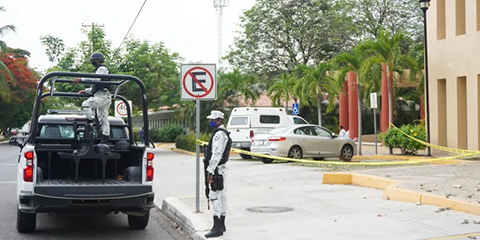
The Mexican government issued a public apology for failing to protect journalist Gustavo Sanchez Cabrera before his murder. This acknowledgment comes three years after his tragic death.Summary
NEW YORK—The Committee to Protect Journalists has welcomed a public apology issued by the government of the southern Mexican state of Oaxaca and the federal government to the family of journalist Gustavo Sanchez Cabrera, three years after he was murdered.
With the apology, issued on Monday in Oaxaca's state capital of Oaxaca de Juarez, both authorities acknowledged "errors and omissions" made by public officials after Sanchez entered into a federally sanctioned protection program, which created circumstances that increased risks to his life.
"We welcome that the Mexican authorities apologized to Gustavo Sanchez's family and acknowledged that his death could have been prevented had the state acted decisively and provided him with adequate protection, as he had been promised," said Jan-Albert Hootsen, CPJ’s Mexico representative. "An apology, however, can only be the first step in a process that must lead to not only appropriate reparation of damages to Gustavo Sanchez's family but also the sweeping changes necessary to make the state of Oaxaca and Mexico safer for journalists. Never again must the Mexican state be complicit in a journalist's death, whether it be the perpetrator or by omission."
Sanchez, a crime and politics reporter, was enrolled in the protection program after surviving an attempt on his life in July 2020, when unidentified gunmen shot him near Morro Mazatan, according to news reports and video that Sanchez recorded at the time.
The public apology was issued in a solemn ceremony in the state governmental palace in Oaxaca de Juarez at noon on Monday, with Sanchez’s widow Marilu Zarate, state and federal officials, journalists, and representatives of press freedom groups, including CPJ, in attendance. It took place three years to the day after Sanchez, a reporter in the Isthmus of Tehuantepec region in southern Oaxaca, was shot by unidentified attackers in his hometown of Morro Mazatan.
The legal counsel to Oaxaca Governor Salomon Jara acknowledged that the state had acted slowly to provide Sanchez with police protection, even though this has been agreed upon with the Federal Mechanism for the Protection of Human Rights Defenders and Journalists, and that state authorities had "minimized" threats against his life.
Tobyanne Ledesma, the head of the Federal Mechanism, which is overseen by the federal government, acknowledged that her institution had also made errors in coordinating safety measures for Sanchez with the Oaxaca state government. She announced several steps her institution had taken to prevent the same from happening again, including improved risk evaluation methodologies.—A CPJ Statement/Photo: Reuters
Key Points
- Gustavo Sanchez was murdered in 2020 while enrolled in a protection program.
- The apology was issued by Oaxaca's government and federal officials.
- Authorities admitted to errors that compromised Sanchez's safety.
- CPJ welcomed the apology, calling for changes to protect journalists.
- The ceremony took place on the third anniversary of Sanchez's death.
Relevant Topics
Ask AI: Understand this story your way
AI EnabledDig deeper, ask anything — get instant context, background, and clarity.
Disclaimer: This feature is powered by AI and is intended to help readers explore and understand news stories more easily. While we strive for accuracy, AI-generated responses may occasionally be incomplete or reflect limitations in the underlying model. This feature does not represent the editorial views of JournalismPakistan. For our full, verified reporting, please refer to the original article.