.png)
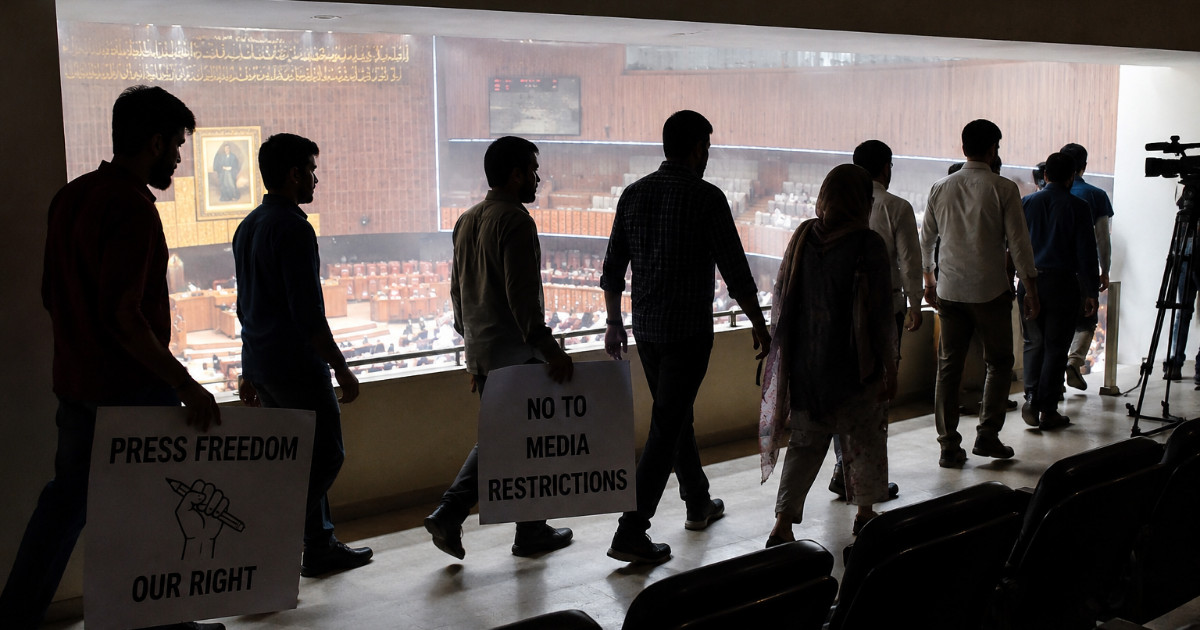
Indian authorities clamp down on foreign journalists
JournalismPakistan.com | Published: 15 February 2018
Join our WhatsApp channel
The IFJ and MEAA have criticized India's visa restrictions on foreign journalists, highlighting cases of denied applications. Calls for the Indian government to uphold press freedom and allow legitimate reporting have been made.Summary
The International Federation of Journalists (IFJ) and the Media, Entertainment & Arts Alliance (MEAA), have raised concern over India’s visa policy to foreign journalists.
The IFJ has urged the Indian government to respect the right of journalists of all nationalities to report on issues of public interest and facilitate their travel for this purpose.
On February 6, Amruta Slee, Indian-born Australian journalist, alleged that she and her colleagues were not granted journalist visas to India they had applied for in December 2017.
Slee is a radio producer for Radio National, a program on ABC, and was part of the team that was given grant to travel to India for reporting. They had proposed a trip to India in February 2018; however, she was neither officially denied nor given a visa to travel to India. Instead, she received an email request to send a list of her potential interviewees in India, and even offers for someone to “accompany” her in Delhi.
In 2017, the ABC published an investigative report on the controversial Carmichael coal mine project in Queensland, Australia, funded by the Adani Group, an Indian multinational conglomerate head quartered in Ahmedabad, Gujarat.
The Consulate General of India (CGI) in Sydney denied the allegations and instead has accused the journalists of violating Indian visa rules. The CGI tweeted: “Delay in issuing visas to ABC news team has nothing to do with the issues mentioned in this article. ABC news journalists violated Indian visa rules recently by engaging in activities which were not declared at the time of applying their visas.” It didn’t clarify what rules were violated by the journalists.
The MEAA is monitoring the situation. MEAA chief executive Paul Murphy said: “This is a disturbing development and not one we would expect from a country that has previously demonstrated a high regard for press freedom. MEAA hopes that Indian authorities will rethink their stance and allow Australian journalists into the country to report legitimate news stories in the public interest.”
The IFJ notes that India has recently been restrictive in visa policy to journalists and rights activists. On December 10, 2016, police in Jammu and Kashmir detained French freelance journalist Edward Paul Comiti for ‘violating visa regulations’. On December 19, Mukunda Raj Kattel, a director of the Asian Forum for Human Rights and Development (FORUM-ASIA) was denied entry in India and was deported a day later. In July 2016, three India-based journalists of the Chinese state news agency, Xinhua, were denied visa extension.
The IFJ said: “The IFJ expresses concerns over the denial of journalist visas to Australian journalist Amruta Slee by the Indian government. India has been restrictive to foreign journalists in recent times. The IFJ believes that denial or delay in visa process for journalists is to ensure that journalists have opportunity to independently report in India. The IFJ urges India to respect journalists’ rights and press freedom.” – IFJ media release
Key Points
- IFJ and MEAA raise concerns over India's visa policy for journalists.
- Australian journalist Amruta Slee faced denial of her visa application.
- India accused of restricting press freedom for foreign media.
- CGI Sydney denies allegations but claims journalists violated visa rules.
- IFJ urges India to respect journalists' rights and facilitate reporting.
Relevant Topics
Ask AI: Understand this story your way
AI EnabledDig deeper, ask anything — get instant context, background, and clarity.
Disclaimer: This feature is powered by AI and is intended to help readers explore and understand news stories more easily. While we strive for accuracy, AI-generated responses may occasionally be incomplete or reflect limitations in the underlying model. This feature does not represent the editorial views of JournalismPakistan. For our full, verified reporting, please refer to the original article.