.png)
Hong Kong fire tests media safety, coverage and crisis reporting
JournalismPakistan.com | Published: 30 November 2025 | JP Asia Desk
Join our WhatsApp channel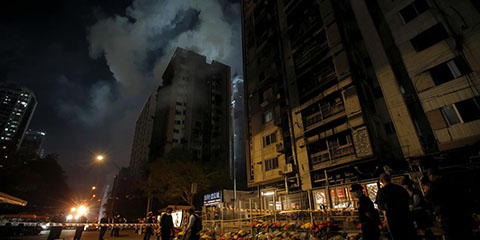
The Wang Fuk Court fire has resulted in at least 146 deaths and has impacted local news organizations in their reporting efforts. Media outlets face challenges in timely coverage, safety protocols, and verifying information amidst chaos.Summary
HONG KONG — Reporting on the massive apartment-tower fire at the Wang Fuk Court complex in Tai Po has pushed local news organisations into a high-stakes operational test. The blaze, which engulfed seven of eight high-rise buildings under renovation, resulted in at least 146 confirmed deaths as of November 30, with authorities still searching for more victims. The scale and speed of the tragedy placed immediate pressure on media outlets to deliver accurate, timely coverage.
News teams responding to the fire have faced difficult coordination challenges: restricted access to disaster zones, rapid flow of unverified social media content, and the need to balance speed with verification under chaotic conditions. These constraints force editorial teams to weigh the urgency of coverage against the responsibility to avoid errors or sensationalism in reporting human distress and casualties.
Reporting risks and safety concerns
Journalists and first responders working at the fire site have had to navigate unstable structures, hazardous materials, and emotional distress among survivors, raising questions about reporter safety and preparedness for trauma coverage. Many newsrooms may now re-evaluate their protocols for real-time disaster reporting, including safety gear, psychological support for staff, and rigorous verification practices.
Accountability, building codes, and public trust
The blaze has exposed alleged violations of fire safety regulations, including the use of flammable renovation materials, malfunctioning alarms, and improper scaffolding, prompting criminal investigations and widespread public outrage. For media covering these developments, there is a heightened responsibility to scrutinize official statements, trace accountability, and follow up on structural, regulatory, and human-rights dimensions of the disaster.
Implications for crisis journalism
The tragedy underlines that covering mass-casualty events demands more than speed: newsrooms must be ready for deep follow-up reporting, sensitive portrayal of victims, and sustained scrutiny of safety practices. Equally, editorial leaders must ensure staff safety and ethical standards even under intense public demand for coverage.
ATTRIBUTION: Reporting draws on coverage by Reuters, Associated Press, and other media agencies.
PHOTO: AI-generated; for illustrative purposes only
Key Points
- At least 146 confirmed deaths from the Wang Fuk Court fire as of November 30, 2025.
- Media struggle with access, rapid information flow, and verification during the crisis.
- Journalists face safety and trauma management challenges while covering the event.
- The incident revealed serious fire-code violations, leading to arrests and public scrutiny.
- The tragedy emphasizes the need for robust newsroom crisis coverage policies and reporter safety.
Relevant Topics
Ask AI: Understand this story your way
AI EnabledDig deeper, ask anything — get instant context, background, and clarity.
Disclaimer: This feature is powered by AI and is intended to help readers explore and understand news stories more easily. While we strive for accuracy, AI-generated responses may occasionally be incomplete or reflect limitations in the underlying model. This feature does not represent the editorial views of JournalismPakistan. For our full, verified reporting, please refer to the original article.