
Flood crisis in Southeast Asia disrupts media access and news flow
JournalismPakistan.com | Published: 30 November 2025 | JP Asia Desk
Join our WhatsApp channel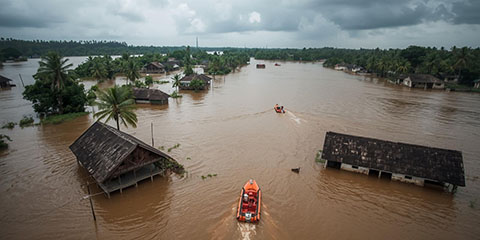
Severe floods and landslides have devastated Thailand and Indonesia, leading to over 400 fatalities and significant reporting challenges. The destruction of infrastructure hampers media efforts, necessitating alternative reporting methods.Summary
JAKARTA / BANGKOK — Floods and landslides triggered by a rare tropical storm sweeping across Southeast Asia have caused widespread devastation in Thailand and Indonesia, severely hampering news distribution and humanitarian reporting. As of November 30, flood-related deaths have risen past 400 across the region, with hundreds still missing and many areas cut off by destroyed roads and damaged communications infrastructure.
The scale of the disaster has created a logistical nightmare for media organisations trying to report from affected zones. Journalists face blocked roads, disrupted power and cellular networks, and restricted access to isolated towns — particularly in Indonesia’s Sumatra island, where landslides and floodwaters have severed communication links and cut off many communities from outside contact.
Reporting challenges and infrastructure breakdown
In some of the worst-stricken areas, rescue teams are using helicopters, warships, and temporary evacuation channels. But for newsrooms, these conditions mean relying on intermittent satellite, community sources, or second-hand reports, which increases risks of misinformation, partial coverage, or delays. The collapse of local networks underlines the vulnerability of traditional newsgathering infrastructure in extreme weather events.
Relief operations and media access prioritisation
Authorities in Thailand and Indonesia have begun large-scale rescue and clean-up operations. In Indonesia, evacuation efforts have reached tens of thousands, though many towns remain inaccessible. In flooded Thai provinces, aid distribution and temporary shelters are being established. For media outlets covering relief efforts, this demands more coordination with local authorities, flexible reporting kits, and contingency for remote or community-sourced news gathering when traditional methods fail.
Impact on Humanitarian and Climate-Related Coverage
The floods are part of a broader pattern of increasingly severe weather events across Southeast Asia, raising the importance of climate-disaster reporting. For journalists, the current crisis underscores the need for better preparedness: mobile reporting kits, redundancy in communications, verification standards for community-sourced information, and protocols to maintain safety and accuracy under chaotic conditions.
ATTRIBUTION: Reporting draws on Reuters, AFP, and regional press coverage
PHOTO: AI-generated; for illustrative purposes only
Key Points
- Floods and landslides in Indonesia and Thailand killed hundreds and displaced tens of thousands as of November 30, 2025
- Damage to roads, bridges, power, and telecommunications infrastructure has hampered traditional newsgathering and distribution
- Media organisations face obstacles, including blocked routes, cut communications, and reliance on remote reporting or community sources
- Relief efforts in flood zones involve airlifts, warships, and emergency evacuations, complicating logistical coordination for journalists
- The disaster highlights challenges for disaster journalism, the need for flexible reporting tools, safety protocols, and verification systems
Relevant Topics
Ask AI: Understand this story your way
AI EnabledDig deeper, ask anything — get instant context, background, and clarity.
Disclaimer: This feature is powered by AI and is intended to help readers explore and understand news stories more easily. While we strive for accuracy, AI-generated responses may occasionally be incomplete or reflect limitations in the underlying model. This feature does not represent the editorial views of JournalismPakistan. For our full, verified reporting, please refer to the original article.