Amar Guriro: Journalism's future is human-AI partnership The JournalismPakistan Global Media Brief | Edition 23 | June 5, 2026 As AI reshapes news, publishers seek a sustainable future Every frame at a cost: The safety crisis facing Pakistan's camerapersons Why journalists are increasingly targeted in conflict zones What the 60 Minutes controversy means for TV journalism Zee secures FIFA World Cup rights in India through 2030 How fact-checkers verify viral videos during breaking news Pentagon restrictions on reporters draw media backlash Israel-Lebanon talks proceed as conflict hinders reporting Why governments are tightening controls on foreign journalists China condemns US restrictions on Xinhua reporter Taiwan condemns China over New York Times reporter expulsion The biggest threats facing journalism in Asia today Press freedom review: The many faces of pressure on the press Amar Guriro: Journalism's future is human-AI partnership The JournalismPakistan Global Media Brief | Edition 23 | June 5, 2026 As AI reshapes news, publishers seek a sustainable future Every frame at a cost: The safety crisis facing Pakistan's camerapersons Why journalists are increasingly targeted in conflict zones What the 60 Minutes controversy means for TV journalism Zee secures FIFA World Cup rights in India through 2030 How fact-checkers verify viral videos during breaking news Pentagon restrictions on reporters draw media backlash Israel-Lebanon talks proceed as conflict hinders reporting Why governments are tightening controls on foreign journalists China condemns US restrictions on Xinhua reporter Taiwan condemns China over New York Times reporter expulsion The biggest threats facing journalism in Asia today Press freedom review: The many faces of pressure on the press
Logo
Janu
JournalismPakistan Global

Hamid Mir highlights closure of Kashmir Press Club in Washington Post

 JournalismPakistan.com |  Published: 22 January 2022

Join our WhatsApp channel
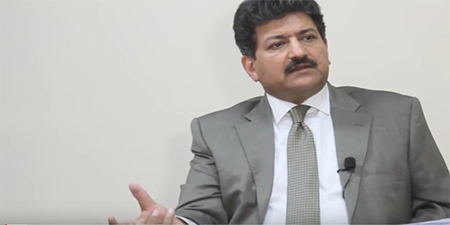
Hamid Mir highlights closure of Kashmir Press Club in Washington Post
Hamid Mir's column in The Washington Post discusses the crackdown on media in Kashmir following the detention of journalist Sajjad Gul. He emphasizes the systematic repression faced by journalists and highlights the significant risks posed to their independence.

ISLAMABAD—The Kashmir Press Club has paid a heavy price for its bold support for Sajjad Gul, a Srinagar-based young trainee reporter detained by the Indian Army on January 5, prominent journalist Hamid Mir wrote in his column published in The Washington Post.

Titled "Why is the Indian government cracking down so hard on the media in Kashmir?" Mir highlighted that the Modi regime had launched a new effort to assert greater control over the territory, and journalists (and human rights activists) are squarely in the way.

There is a systematic crackdown against dissenting voices in India, but it's especially ferocious in Jammu and Kashmir. "Summoning journalists for police questioning and raiding their houses has become routine," he pointed out.

"Gul is not the only journalist imprisoned in Kashmir," Mir wrote, adding that "One of his colleagues, Aasif Sultan, who won an American award in 2019, was arrested after he wrote a profile of a slain separatist. He was charged for collaborating with terrorists—but the police have failed to produce any evidence against him."

"I've spoken with many journalists in Srinagar and Jammu. Many of them told me that police officials often call them, threatening them with the same arbitrary arrest endured by Sultan."

Female journalists in Kashmir, according to Mir, are also facing the wrath of Indian authorities. "The talented photojournalist Musrat Zahra has won many international awards. Charged in April 2020, she is facing a sentence of up to seven years in prison."

"The latest action against the Kashmir Press Club is a message to all Kashmiri journalists to surrender their independence," Mir emphasized, warning that "the crackdown will only create more tension and more hatred."

"Modi can shut down the Kashmir Press Club, but he cannot lock down the minds of Kashmiris."

Key Points

  • Kashmir Press Club closed amidst increased repression.
  • Sajjad Gul detained by Indian Army, prompting media concerns.
  • Systematic crackdown on dissenters in Jammu and Kashmir.
  • Female journalists also facing significant threats.
  • Closure seen as an effort to stifle media independence.

Ask AI: Understand this story your way

AI Enabled

Dig deeper, ask anything — get instant context, background, and clarity.

Not sure what to choose? Try one of these.

The AI generates results based on your selected options
Your AI-generated results will appear here after you click the button.

Disclaimer: This feature is powered by AI and is intended to help readers explore and understand news stories more easily. While we strive for accuracy, AI-generated responses may occasionally be incomplete or reflect limitations in the underlying model. This feature does not represent the editorial views of JournalismPakistan. For our full, verified reporting, please refer to the original article.
Dive Deeper

Newsroom
Amar Guriro: Journalism's future is human-AI partnership

Amar Guriro: Journalism's future is human-AI partnership

 June 05, 2026 Amar Guriro, founder of Pakistan's first AI-powered news platform, says journalism's future rests on human-AI collaboration to improve reporting while preserving editorial oversight.


The JournalismPakistan Global Media Brief | Edition 23 | June 5, 2026

The JournalismPakistan Global Media Brief | Edition 23 | June 5, 2026

 June 05, 2026 Global Media Brief reviews pressures reshaping journalism, press freedom, AI and platform power, and reports BBC's Emmy, 60 Minutes turmoil and Taiwan's protest.


As AI reshapes news, publishers seek a sustainable future

As AI reshapes news, publishers seek a sustainable future

 June 05, 2026 At the World News Media Congress in Marseille, publishers discussed how generative AI is altering newsroom workflows, audience engagement and content licensing.


Why journalists are increasingly targeted in conflict zones

Why journalists are increasingly targeted in conflict zones

 June 04, 2026 Journalists in conflict zones face rising danger as combatants, states and militias increasingly target independent reporting to control narratives.


What the 60 Minutes controversy means for TV journalism

What the 60 Minutes controversy means for TV journalism

 June 03, 2026 The 60 Minutes controversy at CBS exposes tensions over leadership, editorial independence and pressures on legacy TV journalism amid political polarization.


Popular Stories