.png)
Expelled French journalist warns of dark days for media in China
JournalismPakistan.com | Published: 2 January 2016
Join our WhatsApp channel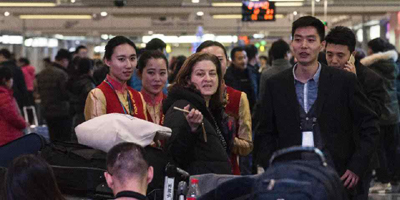
Ursula Gauthier, a French journalist, has been expelled from China after criticizing government policies in Xinjiang. She warns of an increasingly dangerous environment for journalists in the country.Summary
PARIS - A French reporter forced to leave Beijing after she criticized government policy in violence-racked Xinjiang arrived home Friday after warning of dark days ahead for journalists working in China. Beijing accused Ursula Gauthier, the China correspondent for France's L'Obs news magazine, of supporting terrorism after she wrote an article questioning official comparisons between global Islamist violence and unrest in the homeland of the mainly Muslim Uighur ethnic minority. It then refused to renew her credentials, obliging her to leave on December 31 when her visa expired. Speaking from her Beijing home before departing, Gauthier said the future looked bleak for journalists in China. "What happened with this small article about Xinjiang could happen with anything else," she said. "This could be really dangerous in the future." France and Europe should be "concerned about what is going on here, not because it is a journalist, not only because of the freedom of press, but also because it is about China and what China is doing to its minorities, and even its majority, the problem is the same," she added. After landing in France, Gauthier vowed to continue writing about China and condemned Beijing over her effective expulsion. "This has been a month and a half of madness," she told AFP at Charles de Gaulle airport in Paris. "We must not expel a journalist who was just doing her job, who just wrote an article, who knows the situation," she said. In her story for L'Obs, Gauthier questioned China's motives in expressing sympathy for the victims of the November 13 Paris attacks, writing that they were calculated to tie Beijing's harsh policies in Xinjiang into the fight against global terrorism. The veteran reporter, who has spent six years in China, suggested that violence by Uighurs against civilians in the region -- where clashes have killed hundreds in recent years -- was in part driven by resentment of government policies. "I didn't write that I supported terrorism, I never supported terrorism in my article," she told AFP. "I was simply explaining that the Uighurs' anger came from somewhere, just like we can explain the origin of the anger of young Arabs who become radicalised, there are roots to it," she added. The French foreign ministry on Thursday urged Chinese authorities "to re-examine Ms Gauthier's request so she can return to carry out her mission in China". - AFP
Photo caption: Ursula Gauthier (L), the Beijing-based correspondent for French news magazine L'Obs, speakes with hostesses at the airport before she takes her flight back to France, in Beijing on December 31, 2015 (AFP Photo/Fred Dufour)
Key Points
- Ursula Gauthier expelled from China for her critical article.
- Beijing accused her of supporting terrorism after her publication.
- She warns of dark days ahead for journalists in China.
- The French government urges China to reconsider her expulsion.
- Gauthier vows to continue reporting on China despite challenges.
Relevant Topics
Ask AI: Understand this story your way
AI EnabledDig deeper, ask anything — get instant context, background, and clarity.
Disclaimer: This feature is powered by AI and is intended to help readers explore and understand news stories more easily. While we strive for accuracy, AI-generated responses may occasionally be incomplete or reflect limitations in the underlying model. This feature does not represent the editorial views of JournalismPakistan. For our full, verified reporting, please refer to the original article.