.png)
Colombia Supreme Court orders magazine to reveal sources
JournalismPakistan.com | Published: 23 January 2018
Join our WhatsApp channel
The Colombian Supreme Court has mandated that Dinero magazine disclose its sources in a defamation lawsuit against a former official. This ruling has raised significant alarm among free speech advocates regarding the protection of journalists' sources.Summary
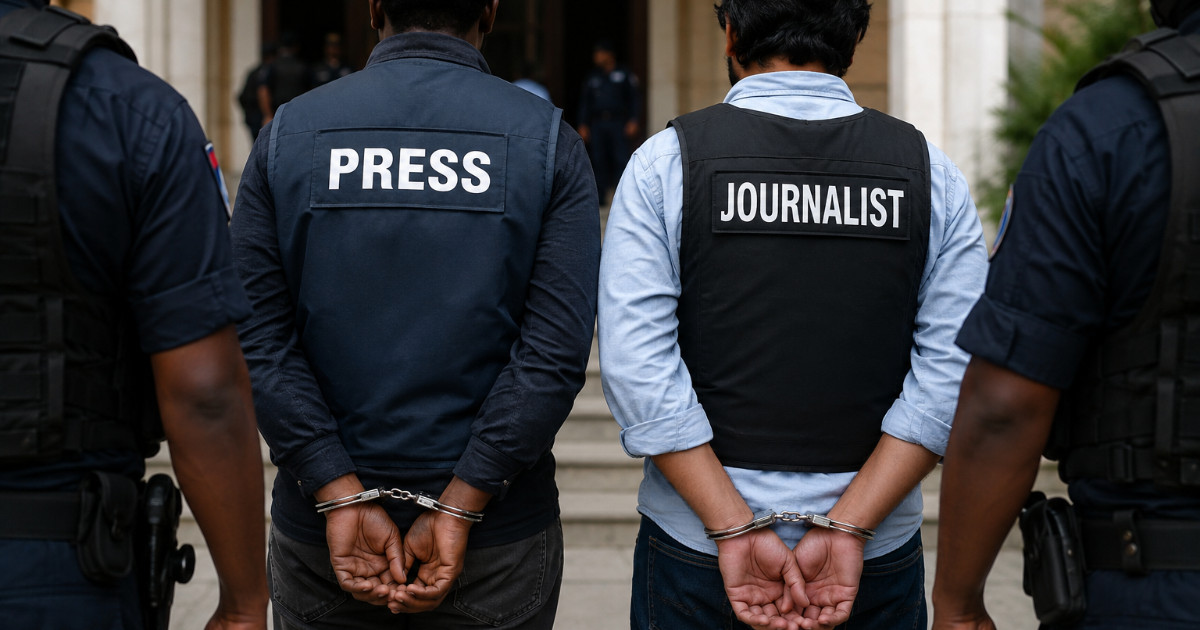
BOGOTA, Colombia - The Committee to Protect Journalists is alarmed by the Colombian Supreme Court ruling that forces a business magazine to reveal its sources and urges the court to overturn its decision on appeal.
In a December 7 ruling that was made public on January 12, the Supreme Court upheld a lower court's decision that emails between sources and reporters from Dinero magazine must be turned over as evidence in a defamation case against the publication, according to news reports.
Publicaciones Semana, a Bogotá-based group that publishes Dinero, said it would appeal the ruling, according to news reports.
A Supreme Court spokesperson who did not want to be named for privacy reasons told CPJ the appeals process should take two to three weeks.
"Journalists sometimes need to protect sources in order to access information that would otherwise never come to light," CPJ Deputy Executive Director Robert Mahoney said from New York. "The Supreme Court ruling is alarming. We hope this ruling will be overturned on appeal."
The Supreme Court spokesperson told CPJ that they let the court's decision speak for themselves and declined to comment further.
Free speech advocates in Colombia decried the decision. In a communique, FLIP said it violates the right of journalists to protect their sources, an internationally recognized principle and one that is enshrined in Colombia's constitution.
The Colombian News Media Association, an industry group, said the Supreme Court's decision would create a "disastrous and unpardonable legal precedent."
The court case stems from a November 2013 story in which Dinero quoted anonymous sources who said that a former vice minister of water and sanitation, Leyla Rojas, was involved in "questionable behavior" when contracting services and securing favors for her new employer, the coal mining company CCX Colombia.
Dinero also published a lengthy rebuttal from Rojas.
Following the publication of both article and rejoinder, Rojas was fired from her job at CCX Colombia, a coal mining firm owned by the Brazilian business magnate Eike Batista, who was imprisoned in January on separate bribery charges, according to the New York Times.
After her dismissal, Rojas filed a defamation suit against Publicaciones Semana, alleging that the magazine article damaged her reputation and prompted CCX to fire her, according to news reports. In the lawsuit, Rojas requested that Dinero reveal its anonymous sources quoted in the magazine's article who accused her of corruption, according to court documents.
CCX has not commented on the case.
A Bogotá court in October 2016 threw out Rojas' lawsuit, but a Bogotá appeals court overturned the decision six months later, according to court documents.
Publicaciones Semana then took the case to the Supreme Court arguing that if the lower court's ruling stood, confidential sources would be too scared to come forward and provide journalists with sensitive information that would serve the public interest.
In a 14-page sentence, Supreme Court magistrate Luis Armando Tolosa declared that constitutional protections for journalists "are not absolute." He wrote that the documents and correspondence upon which Dinero based its article were "imperative" for determining the story's accuracy.
In what it called an effort "to defend press freedom," Colombia's Inspector General's Office, which monitors the actions of government institutions, announced this week that it would support Publicaciones Semana in its appeal.
Pedro Vaca of the Bogotá-based Foundation for Press Freedom (FLIP) told CPJ that the Supreme Court itself has benefitted from the relationship between reporters and anonymous sources in the past.
In 2010, Semana, Colombia's largest news magazine that is also published by Publicaciones Semana, published an investigation revealing that a now-defunct law enforcement agency called the DAS - which was Colombia's version of the FBI - had been spying on Supreme Court magistrates. – A CPJ News Alert
Key Points
- Supreme Court ruling demands Dinero magazine to reveal sources in defamation case.
- Committee to Protect Journalists expresses alarm over the ruling.
- Publicaciones Semana plans to appeal the Supreme Court's decision.
- Free speech advocates criticize the decision as a threat to journalist protections.
- Former vice minister Leyla Rojas filed the defamation suit after being quoted in a magazine article.
Relevant Topics
Ask AI: Understand this story your way
AI EnabledDig deeper, ask anything — get instant context, background, and clarity.
Disclaimer: This feature is powered by AI and is intended to help readers explore and understand news stories more easily. While we strive for accuracy, AI-generated responses may occasionally be incomplete or reflect limitations in the underlying model. This feature does not represent the editorial views of JournalismPakistan. For our full, verified reporting, please refer to the original article.