


JournalismPakistan.com | Published July 23, 2015
Join our WhatsApp channel
MADRID: Spain said Wednesday that it is trying to establish what happened to three Spanish freelance journalists who went missing around the embattled northern Syrian city of Aleppo. A fourth journalist, a Japanese national, also is presumed missing in Syria.
Justice Minister Rafael Catala told Spain's Cadena SER radio the government had no news regarding the three Spaniards and will contact the government in Damascus over the case. Syrian state media has yet to mention the journalists' disappearance.
A Spanish journalism association first reported on Tuesday that the three — identified as Antonio Pampliega, Jose Manuel Lopez and Angel Sastre — were missing since July 13. They had traveled to Syria, presumably together, to report on the country's long-running civil war.
The fourth journalist, Japanese freelancer Jumpei Yasuda, also is presumed missing in Syria after being last heard from one month ago.
Spanish Foreign Minister Jose Manuel Garcia Margallo told reporters that such cases caused much anxiety "because you have a certain sense of impotence, because you're dependent on the movements of those who have kidnapped our compatriots." So far, the government has not specifically said if it is treating the case as a kidnapping.
Margallo urged "maximum discretion" in the case but called for "tranquility," saying similar situations in the past had ended well for Spain.
Spanish Foreign Minister Margallo said Spain's National Intelligence Center was handling the case and that such cases depended a lot on the movements of other parties involved but added that "all the precedents were good."
With the rise of the Islamic State group and a spate of journalists' abductions starting in mid-2013, most media organizations have opted to stay away from coverage inside Syria because of the unacceptable risk level. Over the last year, it has become rare for any foreign journalists to go into northern Syria, where a myriad of Islamic groups and the more extremist Islamic State and al-Qaida groups rule.
"An effort has been underway since then to search and locate them," a statement from their families said.
Elsa Gonzalez, the president of the Spanish journalism association, said the three Spaniards are experienced journalists who have all worked in Syria before and knew what type of precautions they would need to take.
"They are not newcomers to this kind of work," she said Wednesday.
Yasuda, who has been reporting on the Middle East since 2002, was taken hostage in Iraq in 2004, with three other Japanese, but was freed after Islamic clerics negotiated his release.
Kosuke Tsuneoka, another Japanese freelance reporter, said Wednesday that he received a message from Yasuda in Syria on June 23, but has not heard from him since.
"It is not normal that there has been no contact from him at all," Tsuneoka said in a telephone interview, adding that no one should jump to conclusions about Yasuda's fate.
The Japanese Foreign Ministry said it was aware of the reports but has no confirmed information on Yasuda. The three Spanish journalists entered Syria separately from Yasuda.
Previously, three other Spanish journalists were released in March 2014 after being held hostage by Syrian extremists for months. It is widely believed that their government paid a ransom for their release, although it has not been officially confirmed.
Margallo also told reporters that the government was in constant contact with Spanish Embassy in Ankara, Turkey, which handles Syria. Madrid had also contacted U.N. special envoy to Syria Staffan de Mistura, who was scheduled to travel from Beirut to Damascus on Wednesday, and embassies of other countries in the region, he added. - AP

June 11, 2025: Pakistan celebrated a narrow win over Bangladesh, but beneath the jubilation lies a deeper crisis—from sidelined veterans to a collapsing domestic structure—signaling an urgent need for cricket reform.
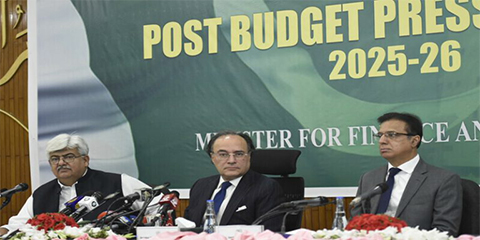
June 11, 2025: Journalists walked out of the post-budget press conference in Islamabad to protest the absence of a technical briefing and the government's dismissive behavior, calling it unacceptable and intolerable.
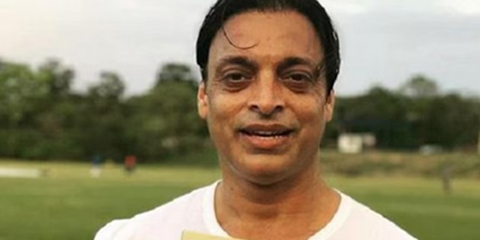
May 31, 2025: Dr. Nauman Niaz has issued a defamation notice to Shoaib Akhtar over derogatory remarks made during a recent broadcast, reigniting a longstanding media feud between the two prominent figures in Pakistan.

May 30, 2025: The Human Rights Commission of Pakistan has demanded the full repeal of PECA, citing its vague language, coercive powers, and threats to free speech and digital rights in Pakistan.
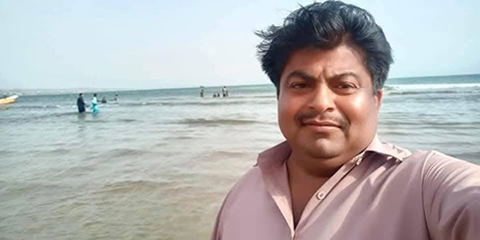
May 30, 2025: The Pakistan Federal Union of Journalists (PFUJ) has condemned the murder of journalist Syed Mohammed Shah in Jacobabad, calling for urgent justice and improved safety for media professionals in Sindh.

May 26, 2025: In Rawalpindi, police allegedly side with Jang Group to block 66 reinstated employees from resuming work despite court orders, drawing sharp criticism from unions and press freedom advocates.

May 25, 2025: PFUJ condemns the Jang Group's decision to dismiss over 80 employees in Rawalpindi, calling it an 'economic massacre.' The union warns of nationwide protests if workers are not reinstated.

May 25, 2025: Daily Jang Rawalpindi has terminated over 80 employees, including female staff, despite multiple court rulings in their favor—raising concerns over labor rights violations and misuse of authority in Pakistani media.
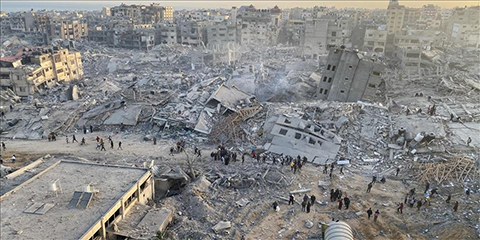
May 19, 2025 PJS reports 219 Palestinian journalists killed in Israeli attacks since October 7, with 30 women among the victims. Over 430 were injured and 685 family members were killed. Read more on the systematic targeting of media in Gaza.
May 15, 2025 Discover the legacy of Samiullah Khan, Pakistan’s legendary "Flying Horse," whose breathtaking speed and artistry redefined hockey. From Olympic glory to World Cup triumphs, his story is one of myth, movement, and magic.

May 04, 2025 Algerian authorities suspend Echorouk News TV for 10 days after it used a racist slur against African migrants. ANIRA demands an apology, calling it a violation of human dignity.

May 04, 2025 NCHR and MMfD launch a journalism fellowship to train reporters on digital rights & gender inclusion in Pakistan. Supported by UNESCO, this initiative aims to bridge the gender digital divide. Apply by May 15, 2025!
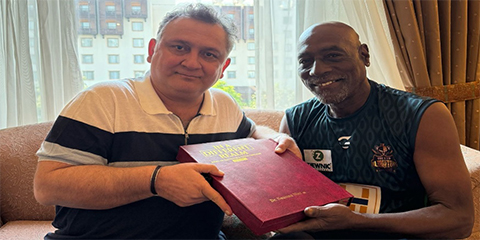
April 23, 2025 Discover Dr. Nauman Niaz’s In A Different Realm: Story of Quadruple & Triple Centuries 1876–2025, a profound exploration of cricket's most monumental innings, blending historical analysis with poetic narrative.