
Journalists face burnout amid nonstop news cycle Why news avoidance may be a bigger threat than misinformation Seven evidence-based media predictions for Pakistan and beyond in 2026 Dawn calls life sentences for journalists an extreme move Arab journalists pledge cooperation to defend media freedom Palestinian rights group flags press access limits Silencing an article in Pakistan makes it louder When telling the story becomes a crime: A warning shot for Pakistani journalism Breaking news alerts then and now: from urgency to overload AI reduces publisher traffic but not newsroom jobs, study finds Palestinian journalists face a wave of detentions in 2025 Journalists face burnout amid nonstop news cycle Why news avoidance may be a bigger threat than misinformation Seven evidence-based media predictions for Pakistan and beyond in 2026 Dawn calls life sentences for journalists an extreme move Arab journalists pledge cooperation to defend media freedom Palestinian rights group flags press access limits Silencing an article in Pakistan makes it louder When telling the story becomes a crime: A warning shot for Pakistani journalism Breaking news alerts then and now: from urgency to overload AI reduces publisher traffic but not newsroom jobs, study finds Palestinian journalists face a wave of detentions in 2025
Logo
Janu
Hall of Shame

Little known group claims killing Swedish journalist

 JournalismPakistan.com |  Published: 12 March 2014

Join our WhatsApp channel
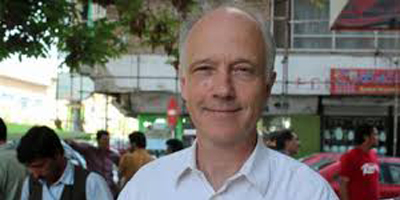
Little known group claims killing Swedish journalist
A little-known militant group claimed they killed Nils Horner, a Swedish journalist, accusing him of being a spy. The incident highlights increasing insecurity ahead of Afghanistan's elections.

KABUL: A little-known militant group on Wednesday claimed responsibility for killing a Swedish journalist in the Afghan capital, saying he was a spy for British intelligence.

Nils Horner, 51, who worked for Swedish Radio and had dual British-Swedish nationality, was shot dead outside a restaurant one Kabul's most heavily guarded districts on Tuesday, underscoring growing insecurity threatening next month's elections.

"Nils Horner was killed in this attack. He was not a journalist. He was a spy for (MI6)," the group, Fedai Mahaz Tahrik Islami Afghanistan, said on its website.

Fedai Mahaz, or "Suicide Front", describes itself as a splinter group of the Afghan Taliban-led insurgency but the Taliban denied any connection.

"This group is not part of the Islamic Emirates. They only try to defame us," said a Taliban spokesman.

Kabul's police chief said he heard Fedai Mahaz had claimed responsibility, but did not have information about them because they were not active in the Afghan capital.

Horner was working for a Swedish broadcaster and had only been in Afghanistan for a couple of days.

Fedai Mahaz's website contains material outlining the group's opposition to the opening of an office for the Taliban in Qatar for peace talks in June last year.

More recently, the same group claimed responsibility for assassinating the provincial governor of Logar province in October. The attack was subsequently condemned by the Taliban because it was carried out in a mosque.

A Western embassy official said the group's suggestion that Horner was a secret agent was "fanciful" but the episode could point to a sinister new trend in which militants were now seeking to pick off random Westerners from the street.

"It kind of all points to being opportunistic, but we can't be sure," the diplomat said. "This whole claim on the website about him being in the Secret Intelligence Service (MI6) and not a journalist is just complete nonsense."

Tuesday's attack came as Afghanistan prepares for the withdrawal of NATO forces and landmark presidential elections scheduled for April 5. The Taliban have threatened to attack anyone who takes part. - Reuters

KEY POINTS:

  • Nils Horner was killed in Kabul on Tuesday.
  • The group Fedai Mahaz Tahrik Islami Afghanistan claimed responsibility.
  • Horner was reportedly a spy, according to the group.
  • The Taliban denied any connection to the militant group.
  • The attack underscores growing insecurity in Afghanistan.
Read Next

Newsroom
Journalists face burnout amid nonstop news cycle

Journalists face burnout amid nonstop news cycle

 January 05, 2026 Growing burnout among journalists in the relentless 24/7 news cycle is affecting their mental health, job satisfaction, and retention, driven by stress stemming from excessive workload, long hours, and constant connectivity.


Arab journalists pledge cooperation to defend media freedom

Arab journalists pledge cooperation to defend media freedom

 January 04, 2026 Arab journalist unions from Jordan and Egypt announce deeper cooperation on training and advocacy, stressing media freedom and the role of Arab media in shaping global narratives.


Palestinian rights group flags press access limits

Palestinian rights group flags press access limits

 January 03, 2026 The Palestinian Centre for Human Rights highlights ongoing restrictions on journalists in occupied territories, impacting press freedom and humanitarian reporting.


Breaking news alerts then and now: from urgency to overload

Breaking news alerts then and now: from urgency to overload

 January 03, 2026 The evolution of breaking news alerts highlights a shift from rare, trusted updates to frequent notifications that contribute to audience fatigue.


AI reduces publisher traffic but not newsroom jobs, study finds

AI reduces publisher traffic but not newsroom jobs, study finds

 January 02, 2026 A study reveals that AI has reduced traffic to news publishers but not job levels, challenging fears of mass layoffs in journalism.


Popular Stories