
2024 Digital News Report reveals rising challenges and shifting trends in global media
JournalismPakistan.com | Published: 18 June 2024
Join our WhatsApp channel
The 2024 Digital News Report from the Reuters Institute outlines pressing challenges in the media landscape, emphasizing the rise of misinformation and economic struggles. It calls for adaptation and innovation among news organizations to maintain relevance and trust.Summary
LONDON—The Reuters Institute 2024 Digital News Report arrives during a period marked by significant global events, including numerous elections and ongoing conflicts in Ukraine and Gaza. In such times, the need for accurate, independent journalism is paramount. However, the news media in many surveyed countries face challenges like rising misinformation, declining trust, political attacks, and economic uncertainty.
The 13th edition of the Digital News Report, covering 47 markets across six continents, reveals unevenly distributed changes in the news industry. While some regions maintain profitable and trusted media, challenges such as platform dominance, AI integration, and economic pressures are reshaping the global news landscape. The report highlights the need for adaptation and innovation to meet these evolving demands.
Key Findings:
- Economic Struggles: Many news organizations report layoffs, closures, and cuts due to rising costs, falling ad revenues, and decreased social media traffic. These economic pressures increase vulnerability to influence from powerful business interests or governments.
- The economic environment is proving challenging for news organizations to maintain independence and resist pressures to skew coverage.
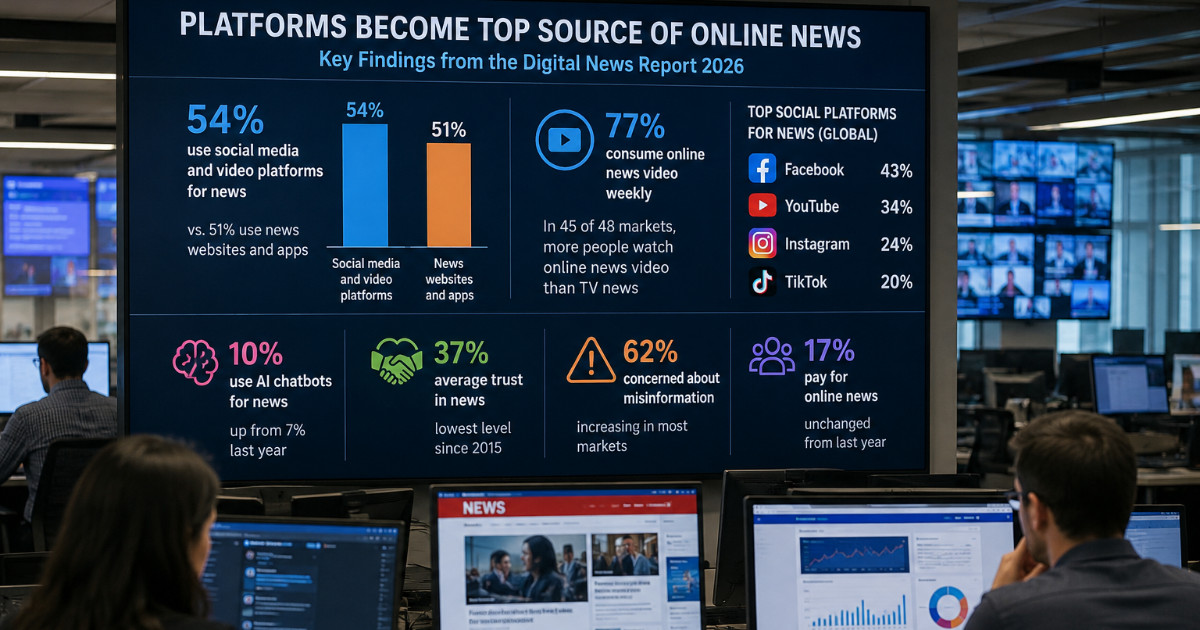
- Platform Shifts: Big tech companies, especially social media and video platforms, are changing strategies, often deprioritizing news in favor of engaging, creator-driven content. This shift impacts the news industry and societal information flows.
- With platforms like TikTok and Instagram Reels gaining traction, the focus has shifted from traditional publishers to content creators, impacting how news is consumed and disseminated.
- AI Impact: Advances in AI, including AI-driven search interfaces and chatbots, may further reduce traffic to news websites, adding more uncertainty to the digital news landscape.
- AI technologies are transforming how news is accessed and personalized, posing new challenges for traditional news outlets to maintain their audience base.
- Changing News Consumption: Video consumption on platforms like TikTok, Instagram Reels, and YouTube is rising. Short news videos are popular, especially among younger audiences, complicating monetization and connection for publishers.
- The trend toward video consumption requires news organizations to adapt their content strategies to cater to changing viewer preferences.
- Trust and Misinformation: Trust in news remains low, with significant concerns about distinguishing trustworthy from untrustworthy content, particularly on platforms like TikTok and X (formerly Twitter).
- The proliferation of misinformation continues to erode public trust in media, necessitating more robust fact-checking and verification processes.
- AI in News: While there is skepticism about AI handling 'hard' news, there is more acceptance of its use in support roles. Publishers must balance efficiency with public preference for human oversight in journalism.
- The use of AI in journalism is a double-edged sword, offering efficiency but requiring careful management to ensure credibility and accuracy.
- Selective News Avoidance: Increasing numbers of people are selectively avoiding news, feeling overloaded by the amount of information, especially regarding ongoing conflicts.
- News avoidance is on the rise, driven by a sense of information overload and the relentless coverage of negative events, highlighting a need for more diverse and balanced reporting.
- News Subscriptions: Growth in news subscriptions is slow, with significant price sensitivity and a reliance on free sources. Discounts are common, and only a small percentage of non-subscribers are willing to pay full price for online news.
- The sustainability of digital news subscriptions remains a challenge, with many consumers unwilling to pay for content amidst abundant free alternatives.
Additional Insights:
- Elections and Interest in News: While elections have sparked increased news interest in some regions, overall trends show declining interest, particularly in countries like Argentina and the United Kingdom. This decline correlates with decreasing engagement in politics.
- Fragmented News Use: The fragmentation of news consumption across multiple platforms indicates a shift in how people access information. With platforms like YouTube, WhatsApp, and TikTok becoming primary sources for news, traditional news outlets face increased competition.
- Youth and News Engagement: Younger audiences are gravitating towards video content and are less connected to traditional news brands. This demographic shift requires news organizations to innovate and find new ways to engage younger viewers.
- Concerns About AI: There is widespread suspicion about AI's role in journalism, particularly for critical news coverage. However, there's more comfort with AI handling support tasks, highlighting a nuanced view of technology's role in media.—Extracts from 2024 Reuters Institute Digital News Report
Key Points
- Economic pressures lead to layoffs and closures in many news organizations.
- Big tech platforms are shifting focus away from news content, affecting dissemination.
- Increased video consumption complicates monetization for traditional publishers.
- Public trust in news remains low amid concerns over misinformation.
- Younger audiences prefer video content, signaling a need for new engagement strategies.
Relevant Topics
Ask AI: Understand this story your way
AI EnabledDig deeper, ask anything — get instant context, background, and clarity.
Disclaimer: This feature is powered by AI and is intended to help readers explore and understand news stories more easily. While we strive for accuracy, AI-generated responses may occasionally be incomplete or reflect limitations in the underlying model. This feature does not represent the editorial views of JournalismPakistan. For our full, verified reporting, please refer to the original article.