
When talk shows turn battlegrounds: The ugly face of Pakistani TV
JournalismPakistan.com | Published: 23 January 2025 | JP Staff Report
Join our WhatsApp channel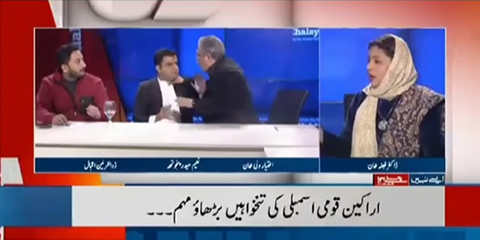
Recent incidents on Pakistani talk shows have escalated into physical confrontations, eroding public trust in media. With rising aggression during debates, experts call for urgent reforms to restore professionalism.Summary
ISLAMABAD—Pakistani television talk shows have increasingly devolved into arenas of chaos, as heated political debates frequently escalate into physical confrontations. The latest incident, which unfolded on BOL News’s "Aisay Nahin Chalay Ga," exemplifies this troubling trend. It featured Pakistan Muslim League-N (PML-N) representative Ikhtiar Wali and Pakistan Tehreek-e-Insaaf (PTI) spokesperson Naeem Haider Panjutha in a shocking display of verbal abuse and physical violence.
The scuffle began when Wali’s remarks about former Prime Minister Imran Khan’s alleged illegitimate daughter provoked Panjutha, who retaliated with insults targeting Punjab’s Chief Minister. A brawl involving slaps and punches ensued, with the show’s host, Dr. Fiza Khan, helplessly shouting, “Please do not do this.”
The fallout of this incident, captured in viral video clips, has sparked debate, with many blaming both the participants and the channel for failing to maintain decorum. Scenes of overturned chairs and dislodged equipment starkly symbolize the disarray within the media landscape.
A Pattern of Violence on Air
Unfortunately, this is not an isolated occurrence. Similar episodes of misconduct have plagued Pakistani talk shows over the years:
June 2021: Dr. Firdous Ashiq Awan slapped PPP’s Qadir Khan Mandokhel during a heated argument on Express News’s "Kal Takk."
March 2022: Shahbaz Gill used abusive language against Dr. Ramesh Kumar Vankwani on Dunya News TV, drawing sharp criticism for the anchor’s lack of intervention.
September 2022: Sher Afzal Khan Marwat attacked PML-N Senator Afnan Ullah Khan during a live debate.
June 2019: PTI’s Masroor Ali Sial physically attacked journalist Imtiaz Khan Faran on a live show.
June 2016: Activist Marvi Sirmed faced verbal abuse and an attempted assault by JUIF’s Hafiz Hamdullah on News One TV.
These incidents reflect the polarized political climate in Pakistan and a disturbing lack of professionalism in televised debates.
Implications for Media Ethics
The repercussions of such incidents extend beyond the immediate participants. They undermine the credibility of media outlets and erode public trust. Talk shows are meant to foster dialogue and inform viewers, not to become spectacles of aggression. When physical altercations occur, they shift focus from substantive issues to sensationalism, leaving audiences disillusioned.
What TV Channels Must Do
Media houses must take urgent steps to prevent such disgraceful incidents:
- Stricter Guest Selection: Ensure guests are vetted for their ability to engage in constructive discourse.
- Robust Moderation: Empower hosts to enforce decorum with clear protocols for managing conflicts.
- Code of Conduct: Establish and publicize a zero-tolerance policy for abusive language and physical aggression.
- Pre-show Briefings: Educate participants on acceptable behavior and the consequences of misconduct.
- Security Measures: Deploy security personnel to intervene quickly if situations escalate.
The Way Forward
While political tensions are unlikely to dissipate overnight, media outlets bear the responsibility of setting a higher standard. By fostering a culture of respect and professionalism, they can reclaim their role as platforms for meaningful dialogue rather than arenas for political brawls.
Key Points
- Talk shows have become battlegrounds with physical violence.
- Recent incidents include a brawl on BOL News and more past cases.
- The lack of moderation undermines media credibility.
- Calls for stricter guest selection and robust conflict management.
- Media channels must implement a zero-tolerance policy for aggression.
Relevant Topics
Ask AI: Understand this story your way
AI EnabledDig deeper, ask anything — get instant context, background, and clarity.
Disclaimer: This feature is powered by AI and is intended to help readers explore and understand news stories more easily. While we strive for accuracy, AI-generated responses may occasionally be incomplete or reflect limitations in the underlying model. This feature does not represent the editorial views of JournalismPakistan. For our full, verified reporting, please refer to the original article.