
Islamabad High Court reserves judgment on petitions in Arshad Sharif murder case
JournalismPakistan.com | Published: 26 August 2025 | JP Staff Report
Join our WhatsApp channel
Justice Inam Amin Minhas of the Islamabad High Court has reserved judgment on the formation of a judicial commission regarding the murder of journalist Arshad Sharif. The move follows petitions from Hamid Mir and Arshad's widow Javeria Siddique, who expressed frustration over delays in the case.Summary
ISLAMABAD — Justice Inam Amin Minhas of the Islamabad High Court on Tuesday reserved judgment on petitions filed by journalist Hamid Mir and Javeria Siddique, the widow of slain journalist Arshad Sharif, seeking the formation of a judicial commission to investigate the circumstances surrounding Sharif’s murder.
Justice Minhas, however, questioned whether the High Court could rule on the matter while it was already pending before the Supreme Court.
Following the hearing, Javeria Siddique voiced her frustration on social media over what she called delaying tactics by the judiciary. “A year ago, I had requested in the court of Justice Aamir Farooq that my petition be clubbed with the petition of senior anchor @HamidMirPAK. The court reserved its decision then, and now after a year, the hearing has begun again only to be reserved once more,” she wrote.
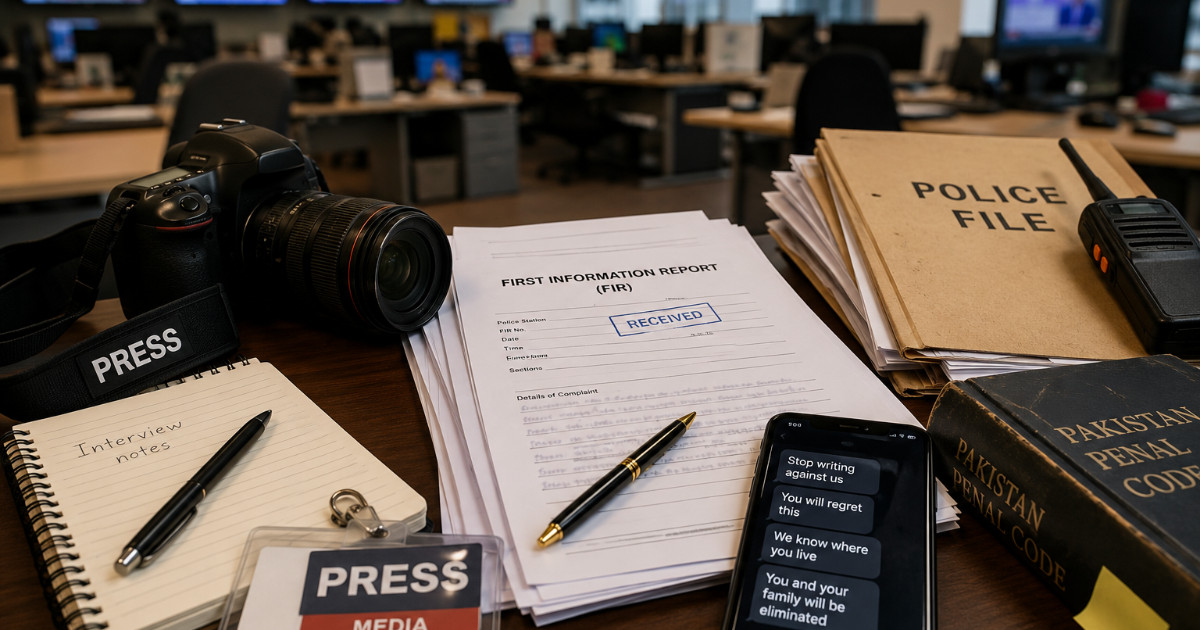
She accused the government of showing no seriousness in pursuing the case. “The courts keep adjourning the hearings, giving the government time, but months and years have passed. If the government couldn’t get the MLA signed in Kenya, how can it be expected to take action against those who filed 16 FIRs against Arshad Sharif in Pakistan and those who threatened him with murder? The government’s authoritarian grip is suffocating the nation, and their disregard for democracy and human rights is appalling. Meanwhile, the judiciary remains silent.”
During Tuesday’s proceedings, Hamid Mir appeared in court with his lawyer, Barrister Shoaib Razzaq. The counsel argued that a judicial commission should be constituted to probe Sharif’s killing and even be sent to Kenya if needed. He recalled that when Mir himself was attacked, the Supreme Court had formed a judicial commission.
Razzaq noted that Arshad had planned to return to Pakistan before his murder and stressed that the 16 FIRs registered against him and the threats he faced must be investigated. “The Supreme Court cannot conduct the investigation itself; it is the commission that must carry it out,” he said.
Justice Minhas questioned what would happen if reports from the FIA, Supreme Court, Kenyan authorities, and FIRs all produced conflicting outcomes. He also inquired about the progress of the FIRs filed in the case.
The DIG of Punjab Police informed the court that seven reports have been submitted to the Supreme Court, FIRs registered, and challans filed. He added that while the situation in Kenya remains unstable, the investigation is moving forward, with two suspects already declared absconders.
Razzaq argued that despite three years having passed, the matter has only advanced as far as report submissions. “This case is not just about Hamid Mir or me—it concerns the entire country,” he said.
At the end of the hearing, the High Court reserved its decision on the petitions.
Key Points
- Judgment reserved on petitions regarding Arshad Sharif's murder.
- Petitions filed by Hamid Mir and Javeria Siddique.
- Concerns raised about judiciary delays and government's seriousness.
- Arguments made for a judicial commission to investigate.
- Seven reports have been submitted to the Supreme Court.
Relevant Topics
Ask AI: Understand this story your way
AI EnabledDig deeper, ask anything — get instant context, background, and clarity.
Disclaimer: This feature is powered by AI and is intended to help readers explore and understand news stories more easily. While we strive for accuracy, AI-generated responses may occasionally be incomplete or reflect limitations in the underlying model. This feature does not represent the editorial views of JournalismPakistan. For our full, verified reporting, please refer to the original article.