.png)
How Omar Kureishi mentored a generation of cricket broadcasters
JournalismPakistan.com | Published: 10 August 2025 | Dr. Nauman Niaz (TI)
Join our WhatsApp channel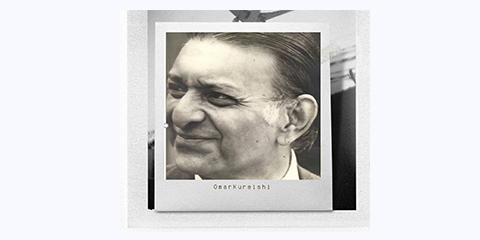
Omar Kureishi left an indelible mark on cricket broadcasting in Pakistan, mentoring a new generation of commentators. His unique blend of history and skill transformed the commentary landscape.Summary
ISLAMABAD—In the beginning, one lives in the half-light. You stand just beyond the circle's golden spill, where the voices of the celebrated mingle with the hum of the crowd, where shadows fold themselves around your shoulders. You are a witness more than a participant, carrying within you the faint ache of a dream not yet confessed.
It was 1997, Rawalpindi Stadium thrumming to the measured percussion of a Test against the West Indies. The air was darned with undertones, the smell of sun-baked grass, and the papery rustle of scorecards. I moved through the press box like a guest without an invitation. Writing had been my ember—nurtured in silence, tempered by doubt—and I had half-convinced myself it would never be my calling. Yet I hovered at its edge, close enough to hear the breathing of my longing.
When Destiny Knocked Without Ceremony
Then fate arrived, wearing no more than the plain clothes of happenstance. Outside the Pakistan Broadcasting Corporation's commentary suite, time was running thin. Omar Kureishi and Chishti Mujahid—the twin peaks of Pakistan cricket commentary were stranded in traffic. Inside, Akhtar Waqar Azim of PTV and Naveed Chauhan of PBC wore the tense stillness of men watching the last grains of sand slip through the hourglass. 'Would you commentate for a few overs, until they arrive?' Naveed asked.
It was a stopgap, a quick basting to keep the broadcast from tearing. Yet beneath that casual necessity, I felt the quiet, resounding thud of something larger—destiny, tapping at my shoulder without ceremony. Instinct told me to decline. Ambition leaned forward. I nodded. In that nod, I crossed an invisible threshold. And just as my voice began to steady, they appeared—Kureishi and Mujahid—men whose very presence could hush a room. I rose to surrender the chair, but Omar's hand, warm, deliberate, closed over mine. 'Young man,' he said, 'continue.'
The Mentorship That Changed Everything
So I did. Besides Chishti Mujahid, I spoke, not because I had earned the right, but because Omar—quietly, like dawn stealing into a room—had chosen to make space for me. That small act of grace lit a lantern whose glow has followed me through every corridor of my life in broadcast media.
A few days later, I placed before him an article I had written for The News International. He read it with the deliberation of a craftsman testing the weight of a stone, and when he looked up, there was no preamble—only the offer of a place in Sportsweek. It felt less like an opportunity given than a hand extended across a threshold I had not known how to cross.
From that day forward, my bond with Omar deepened. He became a quiet architect of my education, steering me toward Jim Swanton, John Arlott, Cardus, Robertson-Glasgow, Brian Johnston, Ashley Cooper—names that expanded my sense of the game until cricket became not just what it is, but a living part of my soul with weather, history, and human frailty.
The Man Who Belonged to Cricket Yet Stood Apart
Omar carried something rarer than skill: an air apart, as though he belonged wholly to the game yet stood half a step beyond it. Cricket had entered him through England's prism, yet he retold it in Pakistan's colours, its rhythm pulsing to his own heartbeat.
From Meerut to the Commentary Box: Early Life and Formation
His was a life of crossroads, each turn shaped by choice as much as chance. Born in Meerut in 1922—or perhaps 1923—into a sprawling Kashmiri family, Omar's earliest memory of cricket was the 1933 MCC tour at the Feroz Shah Kotla, watching his brother Nasir turn out for the Viceroy's XI against Douglas Jardine. The smell of the grass, the clean whites under the pale afternoon light, these became the overture to a lifelong symphony.
Omar's cricketing journey wound through school fields to club grounds, and by 1946, he was sharing a Delhi dressing room with the likes of Amir Elahi, Fazal Mehmood, and Maqsood Ahmed. But it was not cricket alone that claimed him. Words drew him in just as deeply. A brief venture as editor of Appeal magazine flickered out, and fate carried him to the University of Southern California's School of Cinema, later to International Relations. There, he roomed with Zulfiqar Ali Bhutto, debated across the country, and began to shape a voice equally at home in print or in the air.
The Golden Age of Radio Commentary
By the early 1950s, life's tide pulled him back to Pakistan. A chance invitation from Radio Pakistan for the 1954–55 India series drew him into commentary, alongside Jamsheed Marker. For over a decade, their voices were the sound of Pakistan cricket—refined, deliberate, entirely in English, though most listeners understood only the score. The cadence was the meaning. In homes from Karachi to Kohat, radios became hearths. Victories stitched themselves into the fabric of national pride, with Omar and Marker as its tailors. Television changed the craft. On the radio, words had painted every blade of grass. On TV, restraint was its own eloquence. Omar adjusted without complaint, but the magic of the unseen described into life never quite left him.
Building PIA's Golden Years and Beyond Cricket
His career was not bound to the commentary box. Under Air Marshal Nur Khan, Omar built PIA's public relations department into an art form. He brought in Pierre Cardin to design the uniforms, made the airline a symbol of national pride, and turned "Great People to Fly With" into a vow the world believed. He refused political interference, stood firm during elections when ordered to withdraw ads from hostile newspapers, and carried himself with the conviction that commerce and politics should never share a bed.
The Diplomatic Touch: Managing Teams and Crises
He was as deft in diplomacy as in description. In 1974, as Pakistan's team manager in England, he made Majid Khan an opener, a move that helped Pakistan complete an unbeaten tour—an achievement matched only by Bradman's Invincibles. And when Kerry Packer's millions came calling for Pakistan's best, it was Omar who flew to Singapore to bring them back.
The Art of Friendship and Principled Neutrality
He was a man of friendships that spanned politics, business, and sport, but he guarded their boundaries fiercely. Even with Bhutto, his closest friend, politics was never discussed. Neutrality puzzled intelligence agencies, but for Omar it was instinct. Friendship was not currency to be traded.
The Writer's Legacy: Books That Captured an Era
His prose carried the light touch of reverence—resurrecting Neil Hawke, C.B. Fry, C.L.R. James, John Arlott—not as monuments but as men of flesh and shadow. His books—Black Moods, Out to Lunch, You Can't Beat the System—wove cricket into the broader weave of Pakistan's social and political life. He lamented the erosion of values in the game: cheating, indiscipline, the casual abandonment of grace. He accepted neutral umpires as inevitable, but mourned the trust their necessity implied had been lost.
Memorable Moments: The Human Side of a Legend
His life was marked by small, indelible vignettes. On the 1967 tour of England, 'Lumboo' Ansari brought him aloo qeema and paratha each day at Lord's. They picnicked on the grass, and John Arlott, invited once, came all five days, eating with his hands. Once, overhearing Richie Benaud call Pakistanis "chuckers," Omar's temper flared almost to blows. And yet he would later acknowledge Benaud's craft behind the mic.
The Final Sign-Off: A Legacy of Grace
In the end, Omar was more than his voice. He was a craftsman of memory. He spoke in English so elevated that many listeners could not follow each word, yet all felt the weight of his meaning—much like Jinnah, the only other man in Pakistan's history he felt had mastered that art.
On 14 March 2005, Omar Kureishi signed off forever. His final column appeared after his death—a fitting close for a man who wrote until his last breath. He never saw T20 cricket, never had to weigh its neon brevity against his long-form romanticism. Perhaps it was better that way. He had made his peace even with "pyjama cricket" in the end, proving he could adapt without surrendering the past.
Men like him, he would say, are no longer made. And to those who heard his voice fill the long silences between balls, there is still the echo—not merely of cricket, but of something finer, rarer. Grace, caught forever between overs.
Key Points
- Omar Kureishi began his broadcasting career during the 1954-55 India series.
- He mentored many prominent cricket commentators in Pakistan.
- Kureishi's books reflect the intersection of cricket with Pakistan's social and political fabric.
- He maintained principled neutrality in personal and professional relationships.
- Omar signed off from life on March 14, 2005, leaving a rich legacy behind.
Relevant Topics
Ask AI: Understand this story your way
AI EnabledDig deeper, ask anything — get instant context, background, and clarity.
Disclaimer: This feature is powered by AI and is intended to help readers explore and understand news stories more easily. While we strive for accuracy, AI-generated responses may occasionally be incomplete or reflect limitations in the underlying model. This feature does not represent the editorial views of JournalismPakistan. For our full, verified reporting, please refer to the original article.