
Freed writer hopes Turkish journalism will wake from 'coma'
JournalismPakistan.com | Published: 7 October 2017
Join our WhatsApp channel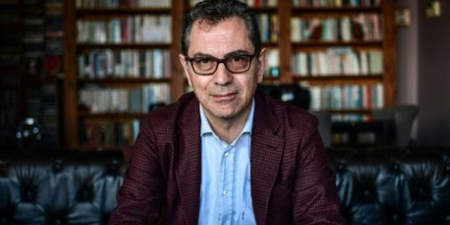
Kadri Gursel, recently released from prison, advocates for the revival of journalism in Turkey. He believes that while journalism is struggling, it is not dead.Summary
ISTANBUL - Journalism in Turkey is at "death's door" but there is still hope it can emerge from a comatose state, one of the country's top journalists said after being released from jail.
Kadri Gursel, who has worked as a journalist and columnist for three decades, walked free from prison last month after 330 days behind bars.
Gursel was arrested last year as part of a hugely controversial case against the Cumhuriyet daily that saw a dozen staff arrested on charges of links to terror groups.
Supporters slammed the charges as an absurdity and proof of the narrowing freedom of expression in the country under President Recep Tayyip Erdogan, who has dominated the country as premier and then head of state for one-and-a-half decades.
Gursel told AFP in an interview at his Istanbul house he believed journalism in Turkey was "at death's door" and in a "heartbreaking state" but not entirely finished.
"I have one single objection to those who say 'journalism is dead in Turkey' - it is in a coma. By saying that I mean that it could recover from the coma," he said.
"There are a lot of journalists in Turkey... It will again be the journalists who will help journalism recover and emerge from this coma.
"Freedoms continue to exist because of those who defend them against those who are out to destroy them."
Most Turkish newspapers are owned by big industrial holding companies with interests in sectors outside the media, including banking and energy.
This, critics say, makes them vulnerable to government influence and imposes a culture of daily self-censorship.
But Cumhuriyet is owned by a foundation to ensure its independence - if not financial security - and its reporting has repeatedly been a thorn in the side of Erdogan.
Supporters insist the trial is merely a punishment for Cumhuriyet's refusal to toe the government line even under the state of emergency imposed after the July 15, 2016, failed coup.
Gursel, who also worked for AFP between 1993 and 1997, started writing columns for Cumhuriyet last year after he parted ways with the Milliyet newspaper as it took a more cautious stance.
Even after his release, Gursel remains charged and the trial is ongoing with the next hearing set for October 31.
Four of his Cumhuriyet colleagues - the paper's chairman Akin Atalay, editor-in-chief Murat Sabuncu, investigative reporter Ahmet Sik and accountant Emre Iper -- remain under arrest.
Gursel vowed to continue writing for Cumhuriyet when he was ready.
"I don't know any other thing except for journalism. That's the only job I can do. I will, of course, keep defending my job," he said.
Gursel said he got through jail by controlling his physical and mental health, as well as avoiding thoughts of the pleasures of daily life. - AFP
Key Points
- Kadri Gursel spent 330 days in jail before his recent release.
- He criticizes the state of journalism in Turkey as being in a 'coma'.
- Gursel remains charged, with his trial continuing in October.
- Many Turkish newspapers face government influence due to ownership structures.
- Gursel vows to continue writing for Cumhuriyet despite ongoing challenges.
Relevant Topics
Ask AI: Understand this story your way
AI EnabledDig deeper, ask anything — get instant context, background, and clarity.
Disclaimer: This feature is powered by AI and is intended to help readers explore and understand news stories more easily. While we strive for accuracy, AI-generated responses may occasionally be incomplete or reflect limitations in the underlying model. This feature does not represent the editorial views of JournalismPakistan. For our full, verified reporting, please refer to the original article.