
Journalists protest outside Dawn offices in Islamabad
JournalismPakistan.com | Published: 26 November 2020
Join our WhatsApp channel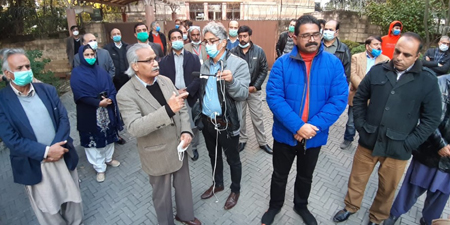
Protestors gathered outside Dawn offices in Islamabad, organized by the PFUJ. They called for the restoration of terminated employees and the reversal of pay cuts.Summary
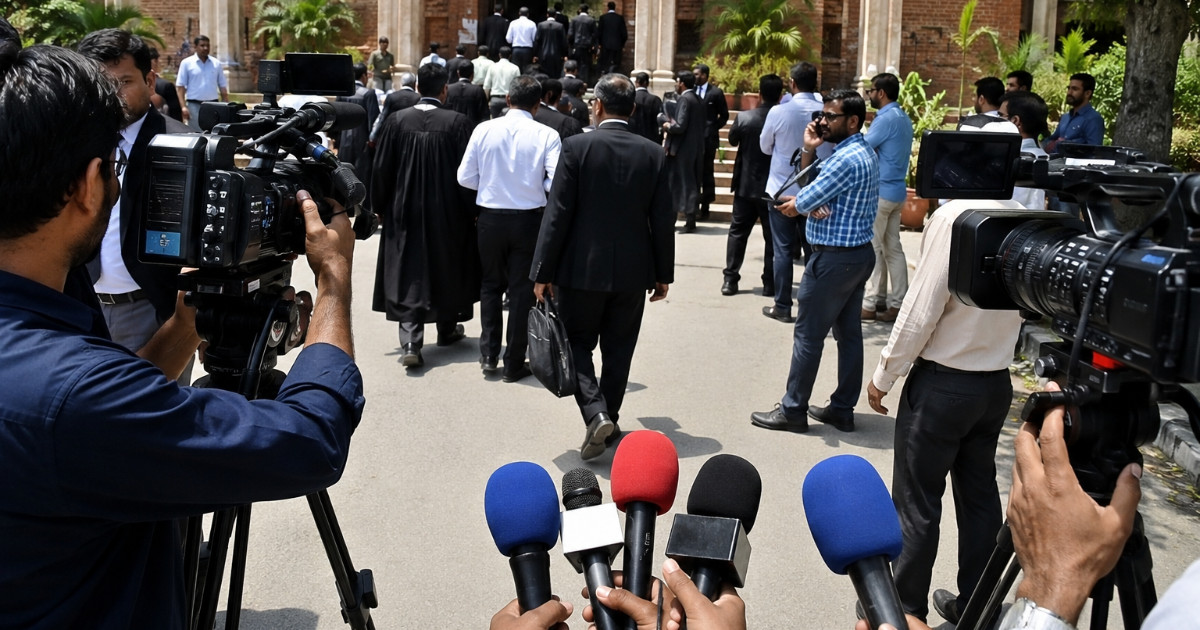
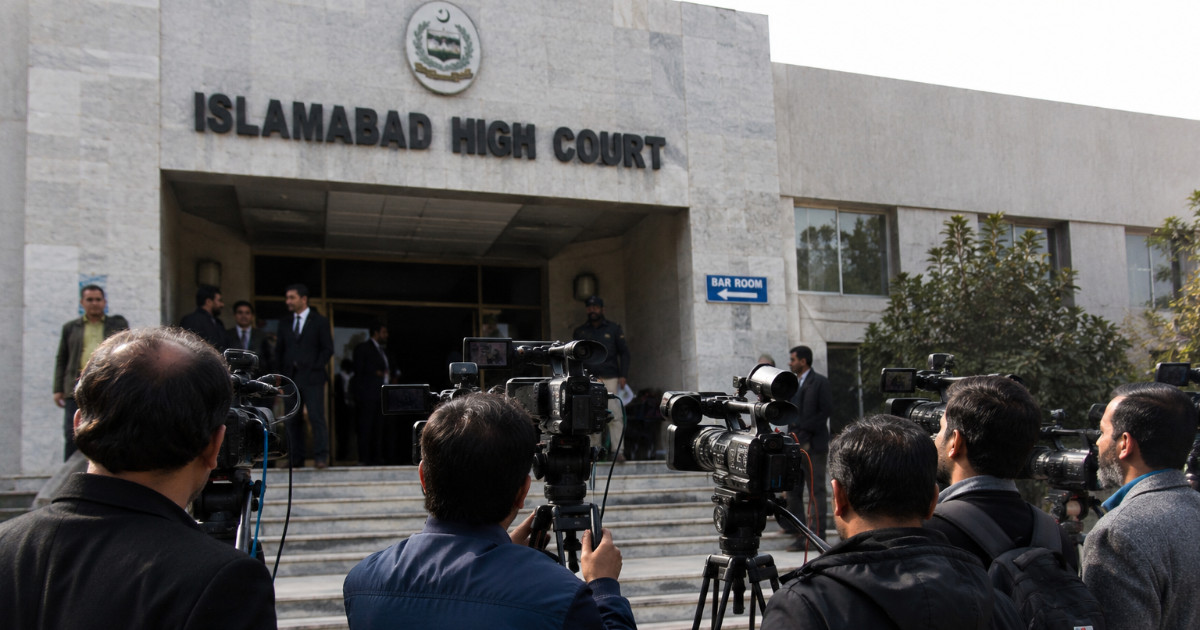
ISLAMABAD—Journalists, media workers, civil society activists, and representatives of trade unions and political parties on Thursday staged a protest outside Dawn offices in Islamabad.
They protested forced terminations and non-reversal of pay cuts by the newspaper management despite a lapse of nearly two years.
Rawalpindi-Islamabad Union of Journalists (RIUJ) organized the protest on the directive of the Pakistan Federal Union of Journalists (PFUJ), in coordination with National Press Club (NPC).
The PFUJ has announced a series of protests across the country in solidarity with the employees of the country’s oldest newspaper.
Addressing the protesters, Secretary-General PFUJ Nasir Zaidi recalled the historical perspective of media struggle in the country and the directives of Quaid-i-Azam Muhammad Ali Jinnah to the management of Dawn when it launched in 1946.
“The Quaid said today a paper is being launched that will promote the cause of Pakistan Movement.” The Quaid directed Dawn management to ensure and protect all the legal and constitutional rights of workers.
Stating that Dawn carries a legacy, Zaidi regretted that the management’s policies were contrary to the directives of Quaid-i-Azam.
He announced that the PFUJ would extend its complete support to Dawn workers and other media outlets against their respective managements’ suppressive policies. He urged Dawn management to restore the terminated employees and reverse the pay cuts along with arrears.
“The PFUJ has always maintained its principled stance, and it was the PFUJ in 1971 that forced the then Prime Minister Zulfiqar Ali Bhutto to release Altaf Gohar, the then editor of Dawn, after he was arrested,” Zaidi pointed out.
He said when the media was in crisis under military dictators like Ayub Khan, Ziaul Haq, and Pervez Musharraf, the working journalists faced the brunt and upheld the flag of media freedom. The management of the news organizations was not seen anywhere. He said the media owners benefitted from PFUJ’s struggle against the Press and Publication Ordinance enacted during the martial law regime under Ayub Khan.
“The PFUJ was in the forefront to defend Dawn when the authorities were bent upon branding it as a traitor entity,” Zaidi said. “There cannot be any rule of law and constitution as long as there is no free voice in the country.”
RIUJ President Amir Sajjad Syed moderated the protest and cautioned the owners of media outlets that their current anti-worker policies would lead to a drop in circulation of newspapers and closure of channels. He declared that the workers were united like a “stonewall” against the recent onslaught against the workers after the relations of media owners with the government improved. “This persecution of workers is not acceptable,” he warned.
Expressing solidarity with protesting media workers, the president of the Punjab chapter of National Party Ayub Malik said Dawn had been the flag-bearer of free speech, and media rights and provided a voice to the voiceless. But the current situation in Dawn was tarnishing its tradition and image and putting the future of this media group in jeopardy. He said Dawn’s failure could lead to the failure of the whole media sector in the country, which would be harmful to the overall press freedom and free speech.
President Awami Workers Party, Punjab, Ammar Rasheed, said only unity among the workers could save the country from total chaos.
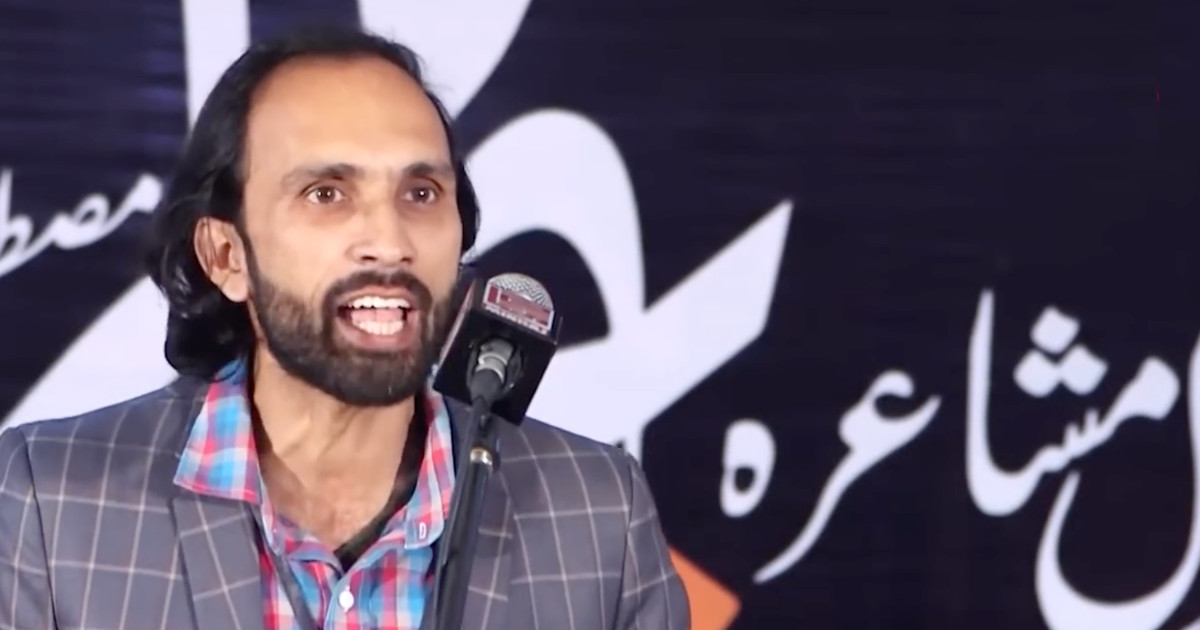
Others who spoke at the protest, included former PFUJ Secretary-General Nasir Malick, senior journalist Matiullah Jan, President APP Union Shahzad Chaudhry, member FEC PFUJ, Raja Shafiq, and Vice-President NPC Khalil Ahmed Raja.
Key Points
- Journalists protested outside Dawn offices in Islamabad.
- PFUJ organized the protest addressing pay cuts and employee terminations.
- Activists emphasized the importance of media freedom and worker rights.
- The protest highlighted the historical struggles of media in Pakistan.
- Speakers warned against the harmful effects of current management policies.
Relevant Topics
Ask AI: Understand this story your way
AI EnabledDig deeper, ask anything — get instant context, background, and clarity.
Disclaimer: This feature is powered by AI and is intended to help readers explore and understand news stories more easily. While we strive for accuracy, AI-generated responses may occasionally be incomplete or reflect limitations in the underlying model. This feature does not represent the editorial views of JournalismPakistan. For our full, verified reporting, please refer to the original article.