
Activists call for fresh probe into killings of Turkish journalists
JournalismPakistan.com | Published: 23 May 2021
Join our WhatsApp channel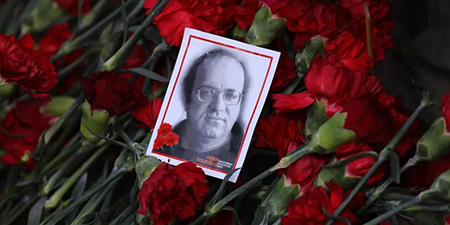
Activists are urging Turkish authorities to reopen investigations into the murders of journalists Ugur Mumcu and Kutlu Adali. Mafia boss Sedat Peker's allegations link government officials to these high-profile cases from the 1990s.Summary
ISTANBUL—Media rights groups on Sunday urged Turkish authorities to investigate explosive allegations by a mafia boss about the high-profile killings of two journalists in the 1990s.
Sedat Peker, an underworld mobster exiled abroad, has accused members of the government and the ruling AKP party of corruption and various crimes in a series of YouTube posts over the past three weeks.
In the latest, released on Sunday, he alleges former interior minister Mehmet Agar was the head of the "deep state" in Turkey—and alleges Agar was involved in the 1993 murder of prominent investigative journalist Ugur Mumcu (pictured).
Mumcu, who wrote for the Cumhuriyet daily, was killed in the capital Ankara after somebody rigged his car to explode when he switched on the ignition. The perpetrators were never identified.
In his video recording, Peker described Mumcu as a "martyr" and a "honourable man."
The mafia boss also claimed the murder of Turkish Cypriot journalist Kutlu Adali had been ordered by a former lieutenant colonel and a senior official of the National Intelligence Organization (MIT), Korkut Eken.
Adali, who worked for the left-wing Yeni Duzen newspaper in Nicosia, was shot dead in front of his home in 1996. His killers have never been identified.
Erol Onderoglu, Turkey representative for Reporters Without Borders (RSF), said Peker's allegations needed to be investigated.
The truth about the killings of journalists in the 1990s had been "swept under the rug", he tweeted. "Peker's legitimacy or position does not justify silence. #Impunity," he added.
The Turkish Journalists' Union called for answers Sunday. "We want an investigation into the #UgurMumcu and #KutluAdali murders," the union tweeted. "We demand that the suspects be put on trial. We call on prosecutors to do their duty."
Peker, 50, who has been jailed several times for a range of offences, from fraud to running a criminal group, fled Turkey in 2020 to avoid prosecution and is thought to be currently living in the United Arab Emirates.
Since then, he has released a spate of videos in which he claims to expose state-media-mafia links after police operations against him and his associates across the country in April.
In one, he accuses Interior Minister Suleyman Soylu of having offered him protection and of having tipped him off about an impending investigation against him last year, which allowed him to flee before being arrested.
Soylu is one of the most powerful figures in President Recep Tayyip Erdogan's government. Despite pressure from the opposition to resign, he has dismissed Peker's allegations.
A journalist for Turkey's state news agency Anadolu was fired Friday after raising Peker's claims against the interior minister at a government press conference with other ministers.
Fahrettin Altun, the Turkish presidency's director of communications, wrote on Twitter: "Those who seek to harm the respectability of our state will pay the price."
There was no immediate reaction to the latest claims.
Some commentators refer to what they call the workings of the "deep state"—derin devlet in Turkish—to talk about a shadowy structure alleged to exist with links between politicians, secret services, mafia and extremist groups. —AFP
Key Points
- Sedat Peker alleges government involvement in journalist murders.
- Ugur Mumcu was killed in a car explosion in 1993.
- Kutlu Adali was shot dead in front of his home in 1996.
- Media rights groups demand accountability and investigation.
- Peker, currently living abroad, continues to release controversial claims.
Relevant Topics
Ask AI: Understand this story your way
AI EnabledDig deeper, ask anything — get instant context, background, and clarity.
Disclaimer: This feature is powered by AI and is intended to help readers explore and understand news stories more easily. While we strive for accuracy, AI-generated responses may occasionally be incomplete or reflect limitations in the underlying model. This feature does not represent the editorial views of JournalismPakistan. For our full, verified reporting, please refer to the original article.