
Journalism group publishes Panama Papers database
JournalismPakistan.com | Published: 10 May 2016
Join our WhatsApp channel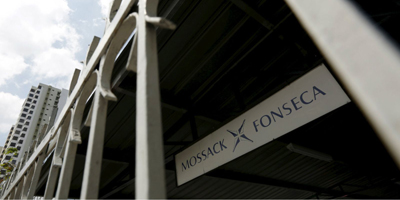
A database of 200,000 offshore companies related to the Panama Papers has been made public by the ICIJ. The release aims to promote transparency around wealth concealment.Summary
FRANKFURT - A group of investigative journalists on Monday published the names of thousands of offshore companies at the heart of a massive trove of data on the finances of the rich and powerful that has become known as the Panama Papers. The International Consortium of Investigative Journalists made data on 200,000 entities available on its website at 2 p.m. EDT Monday.
They contain basic corporate information about companies, trusts and foundations set up in 21 jurisdictions including Hong Kong and the U.S. state of Nevada. The data was obtained from Panamanian law firm Mossack Fonseca, which said it was hacked. Users can search the data and see the networks involving the offshore companies, including, where available, Mossack Fonseca’s internal records of the true owners.
Information and documents on bank accounts, phone numbers and emails have been removed from the database. The ICIJ said it was putting the information online ‘‘in the public interest’’ as ‘‘a careful release of basic corporate information’’ as it builds on an earlier database of offshore entities.
Setting up an offshore company is not by itself illegal or evidence of illegal conduct, and Mossack Fonseca said it observed rules requiring it to identify its clients. The ICIJ prefaced the data dump by noting that the appearance of particular persons and companies on the list doesn’t imply wrongdoing.
But anti-poverty campaigners say shell companies can be used by the wealthy and powerful to shield money from taxation, or to launder the gains from bribery, embezzlement and other forms of corruption. The Group of 20 most powerful economies has agreed that individual governments should make sure authorities can tell who really owns companies, but implementation in national law has lagged.
The data cache, first leaked to Germany’s Sueddeutsche Zeitung daily, showed offshore holdings of 12 current and former world leaders. Reports based on the documents quickly led to the resignation of Iceland’s Prime Minister David Gunnlaugson after it was revealed he and his wife had set up a company in the British Virgin Islands that had holdings in Iceland’s failed banks.
British Prime Minister David Cameron, who had campaigned for financial transparency, faced questions about shares he once held in an offshore trust set up by his father. The ICIJ reported that associates of Russian President Vladimir Putin moved some $2 billion through such companies. Putin’s spokesman dismissed the report.
Hundreds of economists urged world leaders Monday to end the era of tax havens, arguing they only benefit rich individuals and multinational corporations and serve to increase inequality. The 300 economists, in a letter coordinated by activist group Oxfam, say poorer countries are hit hardest by tax dodging.
‘‘As the Panama Papers and other recent exposés have revealed, the secrecy provided by tax havens fuels corruption and undermines countries’ ability to collect their fair share of taxes,’’ the letter said.
‘‘While all countries are hit by tax dodging, poor countries are proportionately the biggest losers, missing out on at least $170 (billion) of taxes annually as a result.’’ The letter comes days before an anti-corruption summit in London, featuring politicians from 40 countries as well as representatives from the World Bank and the International Monetary Fund.
Many of the companies that featured in the Panama Papers were incorporated in British Overseas Territories and the British Virgin Islands.- AP
Key Points
- ICIJ published 200,000 offshore entities' data for public access.
- Database includes corporate information from 21 jurisdictions.
- Panama law firm Mossack Fonseca was hacked for this information.
- Offshore companies are linked to significant global financial corruption.
- Economists urge ending tax havens due to their impact on inequality.
Relevant Topics
Ask AI: Understand this story your way
AI EnabledDig deeper, ask anything — get instant context, background, and clarity.
Disclaimer: This feature is powered by AI and is intended to help readers explore and understand news stories more easily. While we strive for accuracy, AI-generated responses may occasionally be incomplete or reflect limitations in the underlying model. This feature does not represent the editorial views of JournalismPakistan. For our full, verified reporting, please refer to the original article.