
100 days of internet shutdown in Kashmir
JournalismPakistan.com | Published: 13 November 2019
Join our WhatsApp channel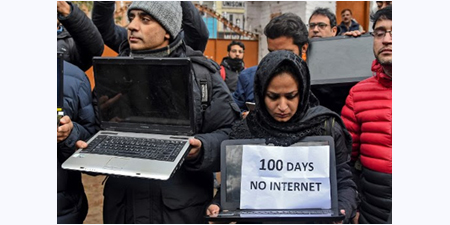
Kashmir has been under a communication blackout for 100 days due to government-imposed shutdowns following the revocation of Article 370. Local media outlets face severe operational challenges, impacting journalism and freedom of expression in the region.Summary
The ban on internet and communication services in Kashmir has now entered 100 days.
The International Federation of Journalists (IFJ) and its South Asia affiliates represented by the South Asia Media Solidarity Network (SAMSN) have expressed grave concern over the communications shutdown and demanded the immediate removal of the ban. Following the revocation of Article 370, ending the partial autonomy and statehood of Jammu and Kashmir on August 5, 2019, India’s government led by Prime Minister Narendra Modi imposed a communications shut down along with a curfew in Jammu and Kashmir. Following the revocation, internet and telephone services were cut, while digital censorship and surveillance have increased. In the absence of internet and broadband services, media cannot upload news online. Local reporters based in nine districts of the Kashmir Valley have no way to communicate with each other and are forced to travel to the capital, Srinagar, to file stories.
According to journalist and vice president of the Kashmir Press Club, Moazum Mohammad, the situation has triggered widespread job and salary cuts, with some of the leading newspapers resorting to salary cuts ranging from 20 to 40 percent. During the lockdown, the IFJ has been advised that journalists have faced consistent attacks and harassment. A report by Committee to Protect Journalists (CPJ) reveals that over 920,000 tweets referencing Kashmir have been blocked, and Twitter accounts have withheld.
According to the Indian Journalist Union, the lockdown has made it impossible for local media in Kashmir to publish stories about the region. The IJU demands “immediate withdrawal of the communication lockdown from Kashmir and restore freedom of media in the valley.” Members of SAMSN said: “We demand that the Indian government remove this grip over the Kashmir media and demand that the right to freedom of expression is restored in the valley. All members of SAMSN stand together in solidarity with the journalists in Kashmir valley.” IFJ said: “The communication shutdown continues to silence independent media and coverage in Kashmir. The shutdown undermines the free flow of information and freedom of expression enshrined by article 19 of Universal Declaration of Human Rights and denies the public’s right to know. The devastation wrought on Kashmir by this shutdown must end now and communications restored.” — An IFJ media release/Photo: AFP
KEY POINTS:
- 100 days of internet and communication shutdown in Kashmir.
- Local reporters are forced to travel to file stories due to lack of communication.
- The shutdown has led to widespread salary cuts for journalists.
- Over 920,000 tweets regarding Kashmir have been blocked by Twitter.
- International organizations demand restoration of media freedom and communication.